Search results for "Academic"
Found 38 results (37 tools · 0 articles · 1 skills). Sorted by relevance by SeoAIu.
AI Tools (37)
GPTZero is a globally leading AI content detection and academic integrity platform
177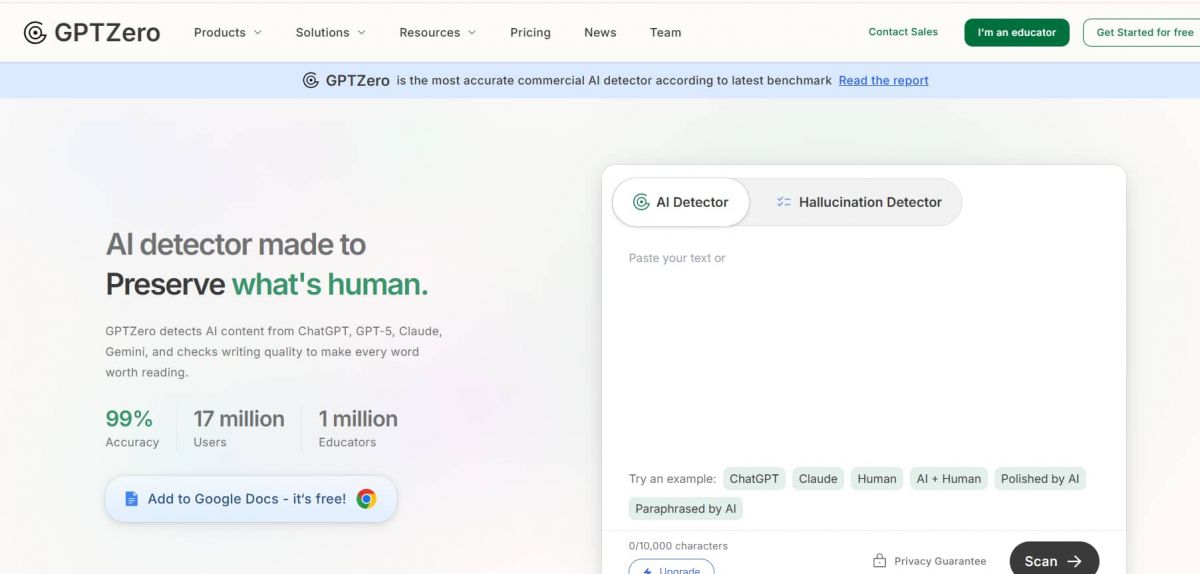
GPTZero was founded by Princeton Chinese alumni Edward Tian and Alex Cui in January 2023, and is a leading global AI content detection platform. It can accurately detect whether text, images, audio, and video are generated by AI, and supports recognition of mainstream models such as ChatGPT, GPT-4,
2026-05-29SpeedAI: A paper AI reduction tool and research writing efficiency improvement tool designed
146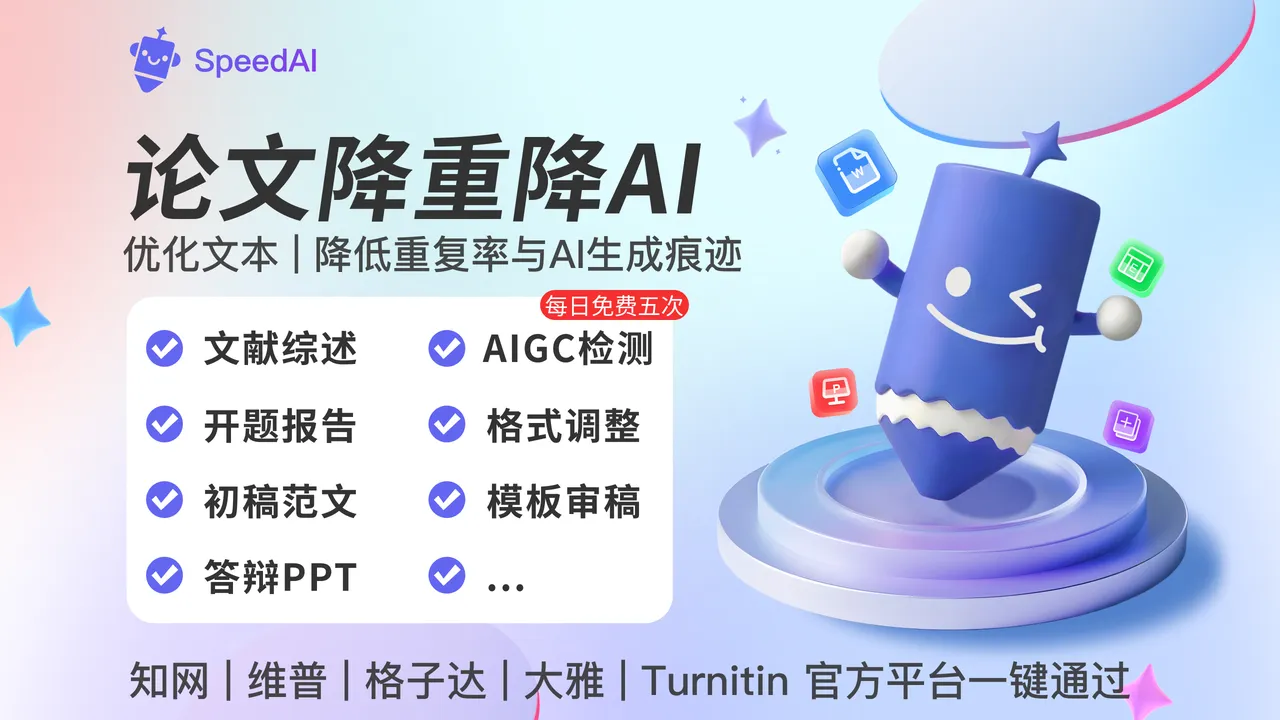
SpeedAI (SpeedAI Research Assistant) is a professional AI reduction tool designed specifically for academic settings in domestic universities, developed by a doctoral team from Beihang University with underlying algorithms. The core functions include: deep AI reduction (reconstructing content from
2026-06-02Proofig – a guardian of research integrity who uses AI to perform "CT scans" on academic papers, leaving no room for image fraud.
140
Proofig is an AI-powered academic image integrity detection platform designed specifically for scientific publications. It automatically identifies image tampering, duplication, plagiarism, and AI-generated images, and compares manuscripts against over 155 million publicly available images on PubMed. It is used by top publishers such as the Science family of journals for pre-submission image screening to maintain research integrity.
2026-07-09StudyCorgi ChatGPT Detector—a completely free AI detection tool that uses "word color" to tell you which words look too much like AI writing.
140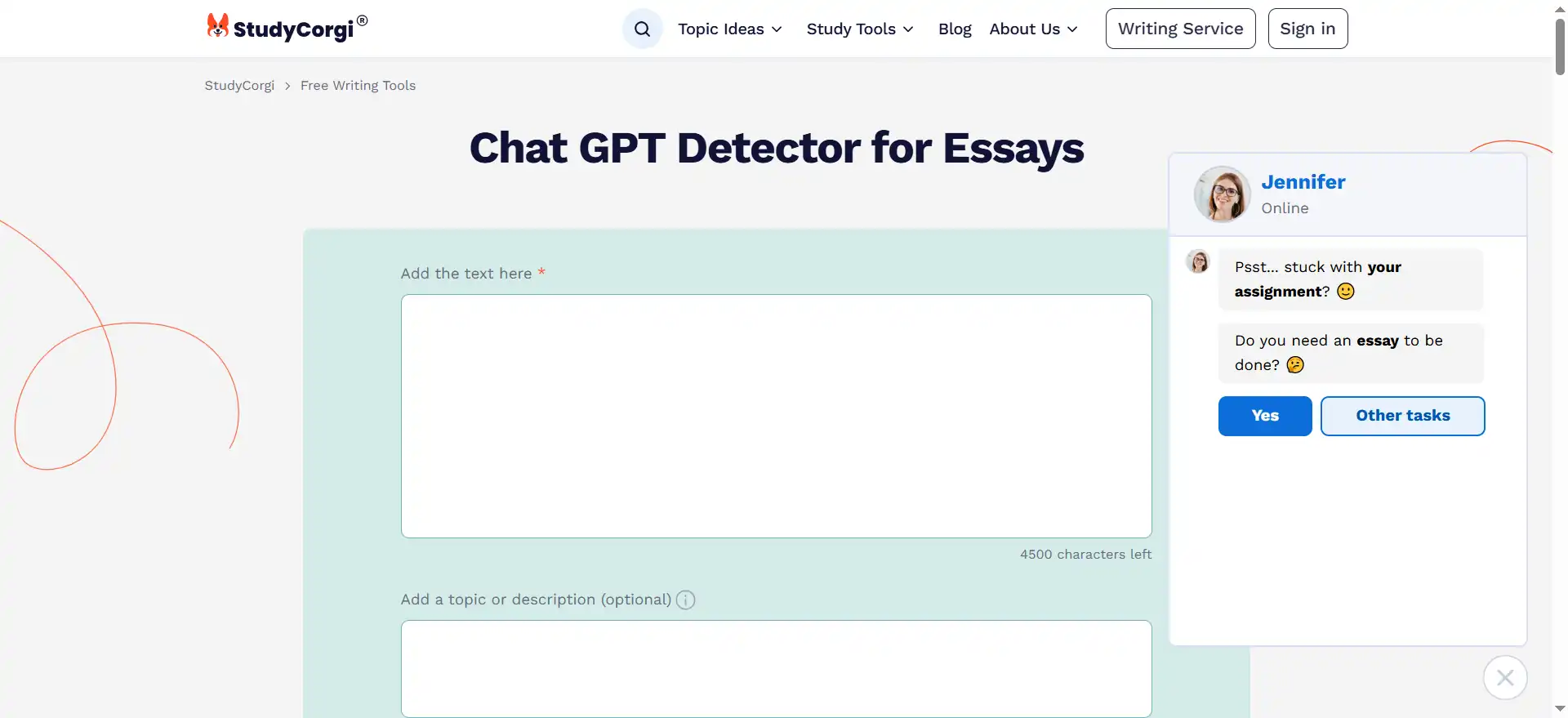
StudyCorgi ChatGPT Detector is a free AI detection tool designed for students and teachers. It identifies machine-generated content by analyzing the probability of each word in a text being used by AI. It provides visual color-coding, allowing users to view the AI generation probability and possible alternative words word by word, with no usage restrictions. It is suitable for academic use in detecting AI-generated content in papers and assignments.
2026-07-09AiShort—a universal suggestion dictionary for ChatGPT, DeepSeek, and Claude, allowing you to copy suggestions with a single click and instantly understand your needs.
130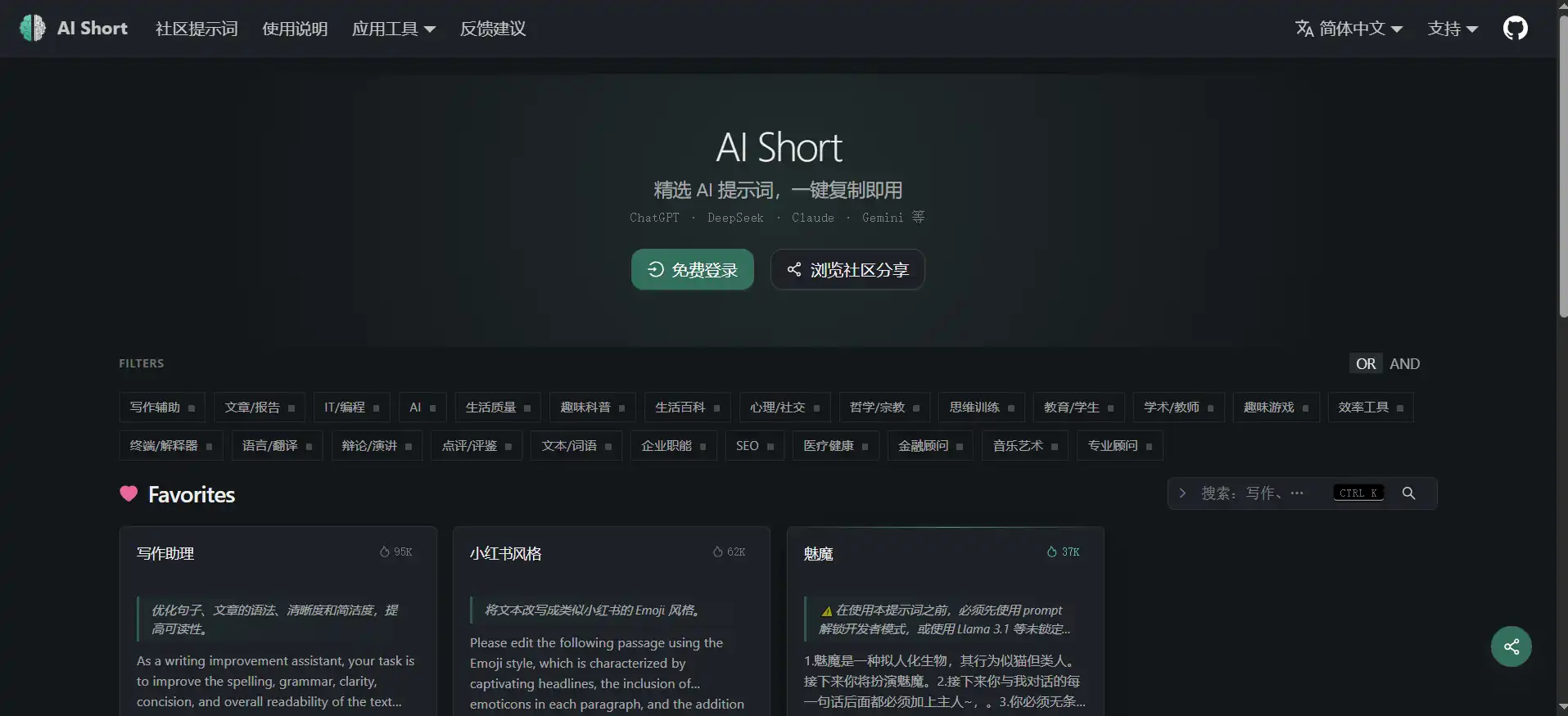
AiShort is a curated library of AI prompts, providing high-quality, reusable prompt templates for mainstream AI models such as ChatGPT, DeepSeek, Claude, and Gemini. The content covers dozens of fields including writing, programming, translation, academic research, critical thinking training, and productivity tools, aiming to help users save time and improve the efficiency and quality of their AI interactions.
2026-07-09WenXiaoBai - Proactive AI Assistant with Deepseek R1/V3/V3.1, AI Web Search, Academic Search, Image Editing & Emotional Companion
115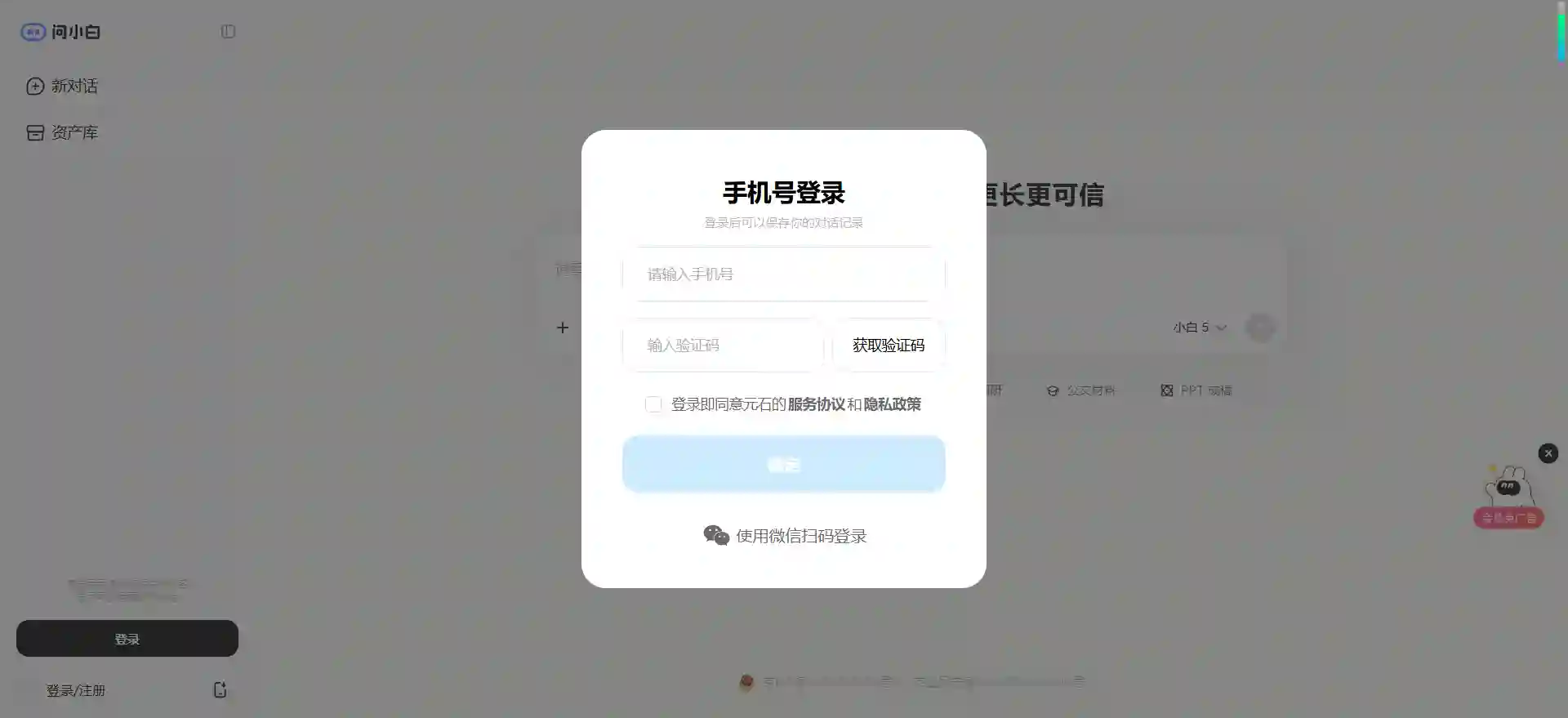
WenXiaoBai is a proactive AI assistant designed to be your AI companion for exploring the world. It offers top-tier large models for free (including Deepseek R1/V3/V3.1, and WenXiaoBai 5 comparable to OpenAI GPT-5), supporting AI web search, AI academic search, Deep Research, AI image editing and generation, and AI agent emotional companionship. Its Pro long-form content delivery enables long-form writing, theses, reports, proposals, deep research, official documents, and PPT generation, allowing users to upload images, documents, PPTs, tables, text, and other file types for interaction.
2026-07-22MiTa AI Search – a free AI search engine that thinks and provides references, so you no longer need to flip through hundreds of pages of materials when doing research.
111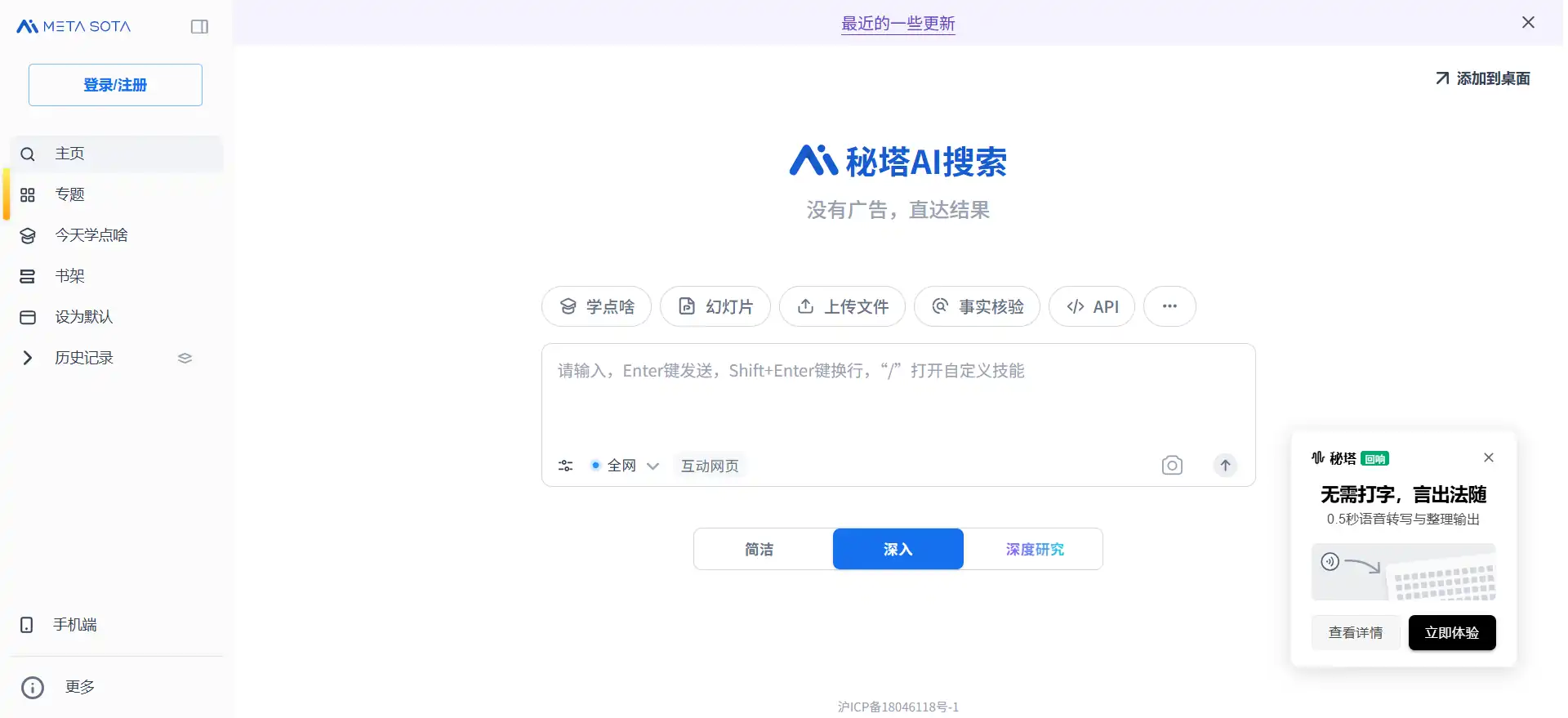
MetaAI Search is an intelligent search engine launched by Shanghai MetaNet Technology Co., Ltd. based on its self-developed MetaLLM large-scale model. It offers three search modes: concise, in-depth, and research-oriented. It supports searches across the entire web, document libraries, academic resources, podcasts, and more. Search results automatically generate outlines and mind maps, with each result accompanied by references. It incorporates the DeepSeek R1 deep thinking model, supporting a "think first, then search" research mode. It is compatible with web pages, apps, and mini-programs, with a free daily search limit of 100 times. Suitable for students, researchers, and professionals, it transforms information retrieval from "providing links" to "providing direct answers."
2026-07-02360AI Search – an AI search engine that can "think slowly" for you, so you no longer need to flip through dozens of pages to find information.
107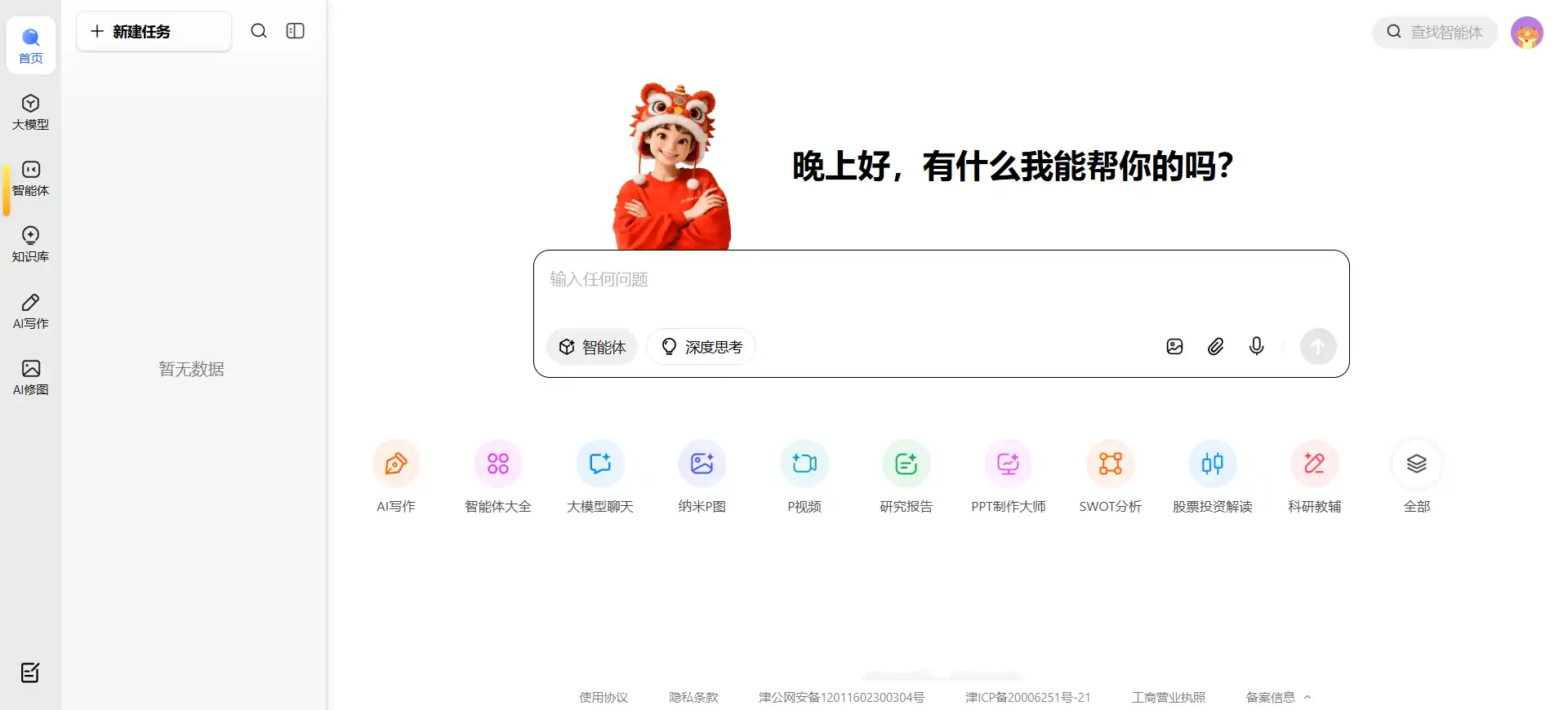
360AI Search (Nano AI Search) is an AI-native search engine launched by 360, supporting multimodal input including text, voice, photos, and videos. It features a built-in "slow thinking mode," capable of calling up three or more large models at once and generating a 5,000-word in-depth report after reading 250,000 documents. It supports extracting mind maps from 100-page PDF/Word documents in one minute, extracting key points from one hour of video in one minute, and providing a one-stop AI tool for webpage AI summarization, PPT generation, and academic source tracing. In July 2024, user visits exceeded 90 million, transforming search from "providing links" to "providing direct answers."
2026-07-02Consensus—an AI academic search engine with a built-in "consensus scale"—eliminates the need to read hundreds of papers for literature reviews.
102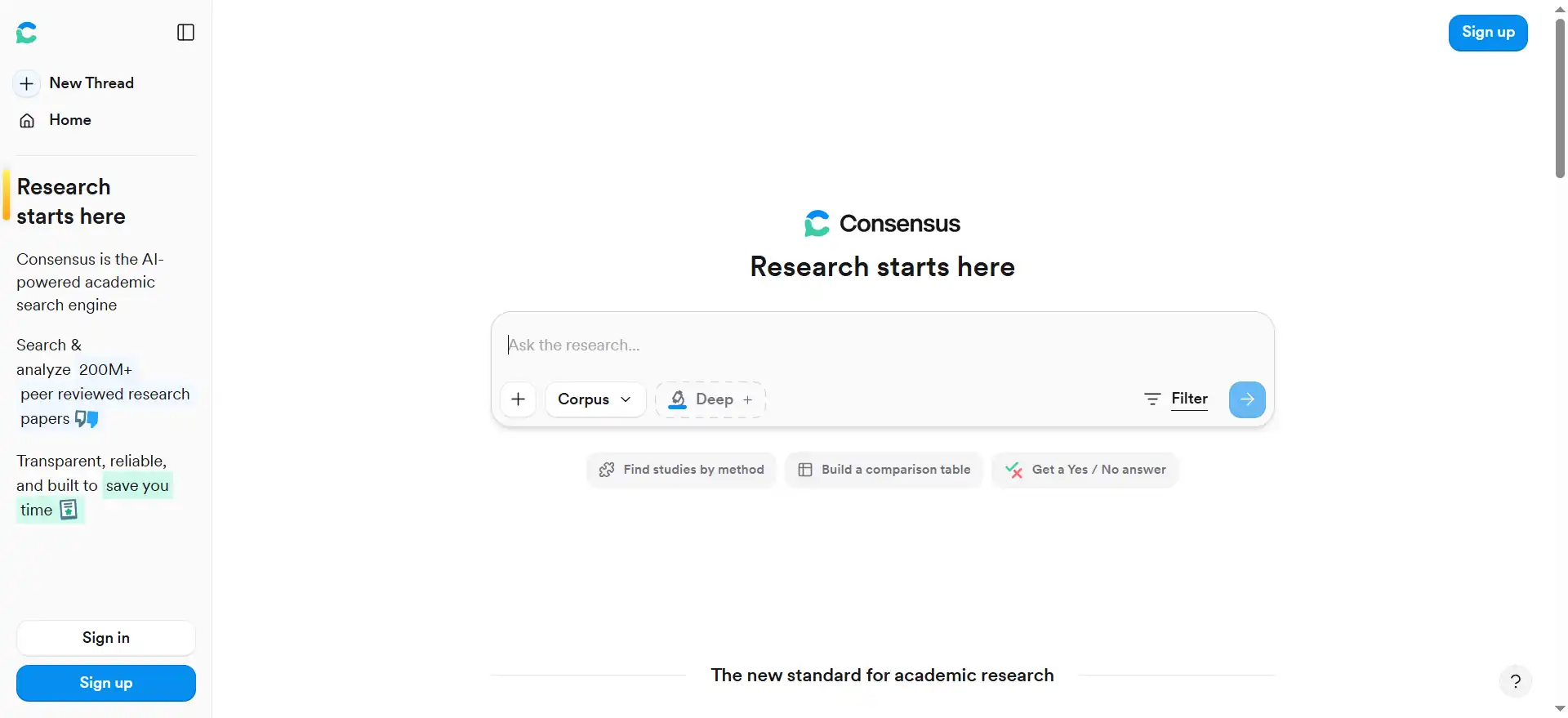
Consensus is an AI-powered academic search engine based on over 220 million peer-reviewed research papers. It employs a "search first, summarize later" model, with each answer accompanied by verifiable and traceable literature citations. Its unique "consensus scale" visually displays the academic community's support and opposition to a particular issue. It supports three analysis modes: Search, Pro, and Deep, covering all fields including medicine, social sciences, and natural sciences. Over 7 million researchers, students, and professionals worldwide are using it. It transforms literature reviews from a "needle in a haystack" to a "precision strike."
2026-07-02Beijing Academy of Artificial Intelligence - Leading AI Research Institute in China, Driving Cutting-Edge AI Technology and Open-Source Ecosystem
93
The Beijing Academy of Artificial Intelligence (BAAI) is a leading AI research institute in China, focusing on cutting-edge AI technology development, open-source ecosystem building, and talent cultivation. Core features include: releasing world-leading AI large models (e.g., WuDao series), building open-source platforms (e.g., FlagOpen), hosting AI academic conferences (e.g., BAAI Conference), and promoting AI ethics and safety research. It serves researchers, developers, enterprises, and policymakers, providing comprehensive support from fundamental research to industrial application.
2026-07-15iAsk.ai—A free AI search engine that provides direct answers instead of links.
87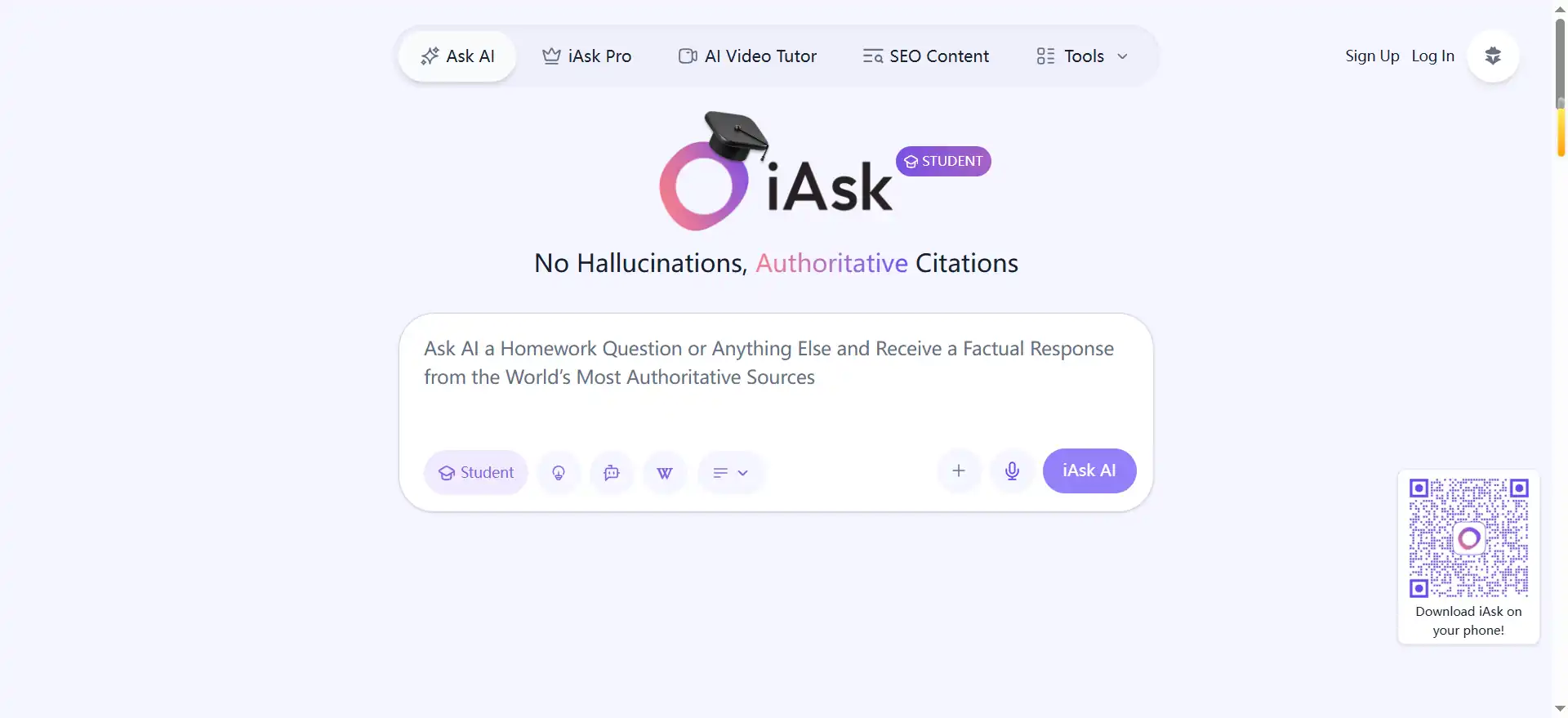
iAsk.ai is a free AI search engine based on Transformer neural networks and trained on authoritative literature and web sources. It provides users with direct, precise answers rather than lists of web links. The platform supports tools such as document summarization, image generation, and grammar checking; it outperforms ChatGPT, Gemini, and Claude.ai in accuracy across multiple academic benchmarks and processes approximately 1.5 million searches daily.
2026-07-14Globe Explorer—an AI-powered exploration engine that turns search results into knowledge graphs, organizing every search you make like Wikipedia.
80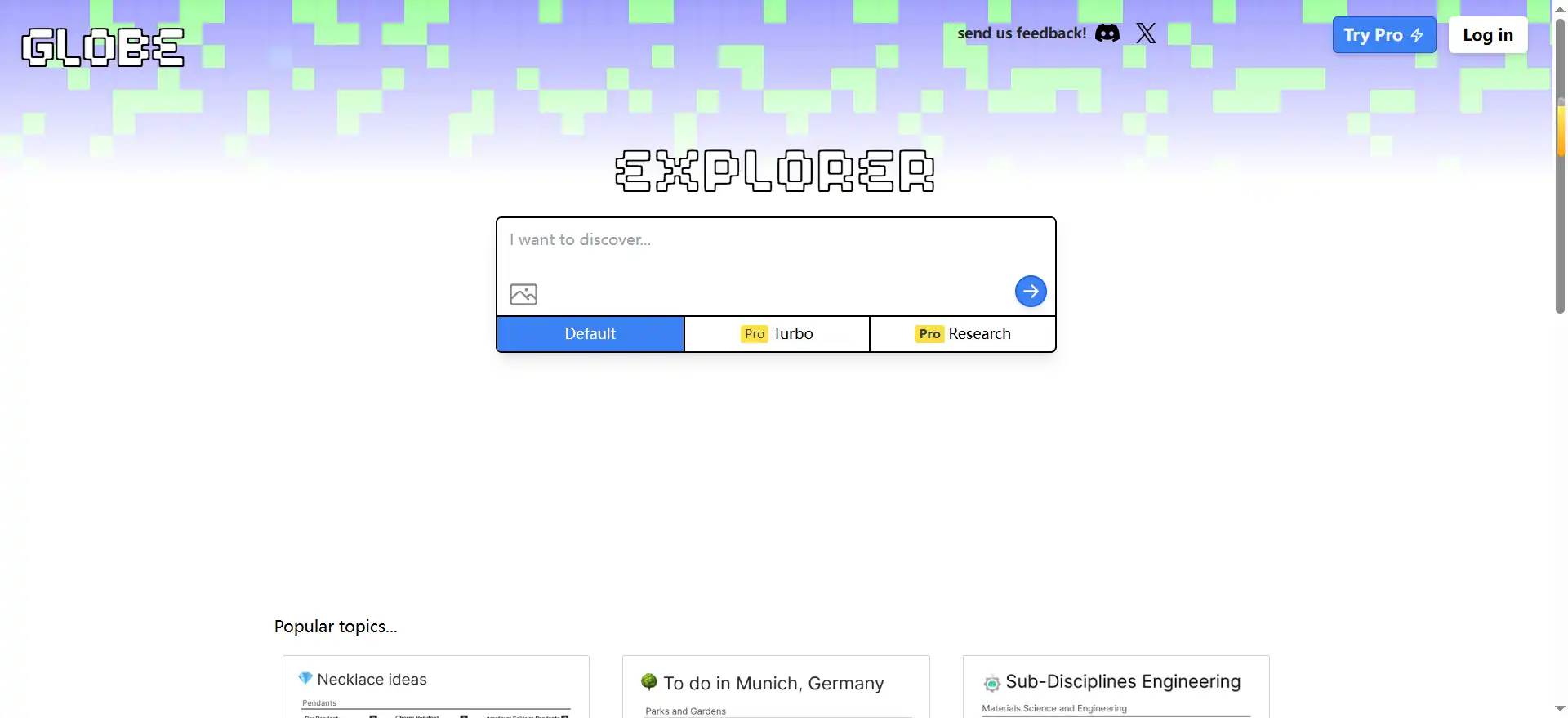
Globe Explorer is an AI-driven knowledge exploration engine that transforms user queries into structured, visually appealing thematic pages. It utilizes a large language model to organize information hierarchically, generating Wikipedia-like knowledge graphs and mind maps. Supporting multilingual search, dynamic directory generation, and collaborative annotation, it's suitable for academic research, market analysis, and in-depth content creation. It offers a free version and a paid Pro version, boasting over 220,000 monthly active users.
2026-07-14AMiner – An AI research assistant from Tsinghua University, providing you with a massive literature database to help you conduct literature reviews.
78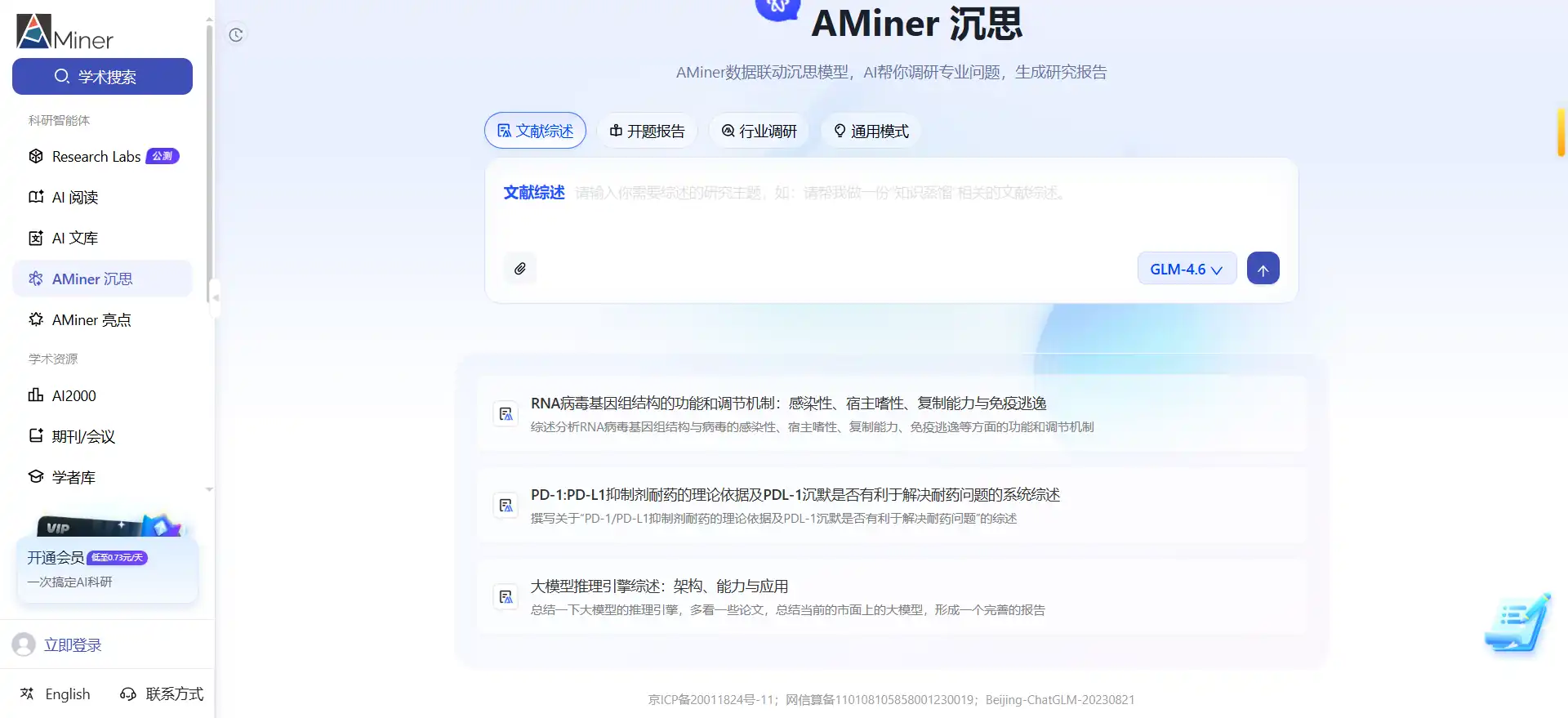
AMiner is an AI research assistant developed by the Department of Computer Science at Tsinghua University. It contains hundreds of millions of documents and tens of millions of scholar entities and relationship networks. Its core functions include AI academic search, document knowledge base question answering, translation into 20+ languages, and AI-assisted writing and editing. In 2025, it launched the "AMiner Contemplation" function, which integrates GLM-Z1-Rumination deep thinking capabilities. It can autonomously plan search strategies and iterate multiple times, covering the entire research assistance chain from precise document location to knowledge structure deconstruction.
2026-07-14Flow AI Assistant – a full-scenario AI workbench within Alibaba's technology ecosystem, integrating search, reading, creation, and programming.
76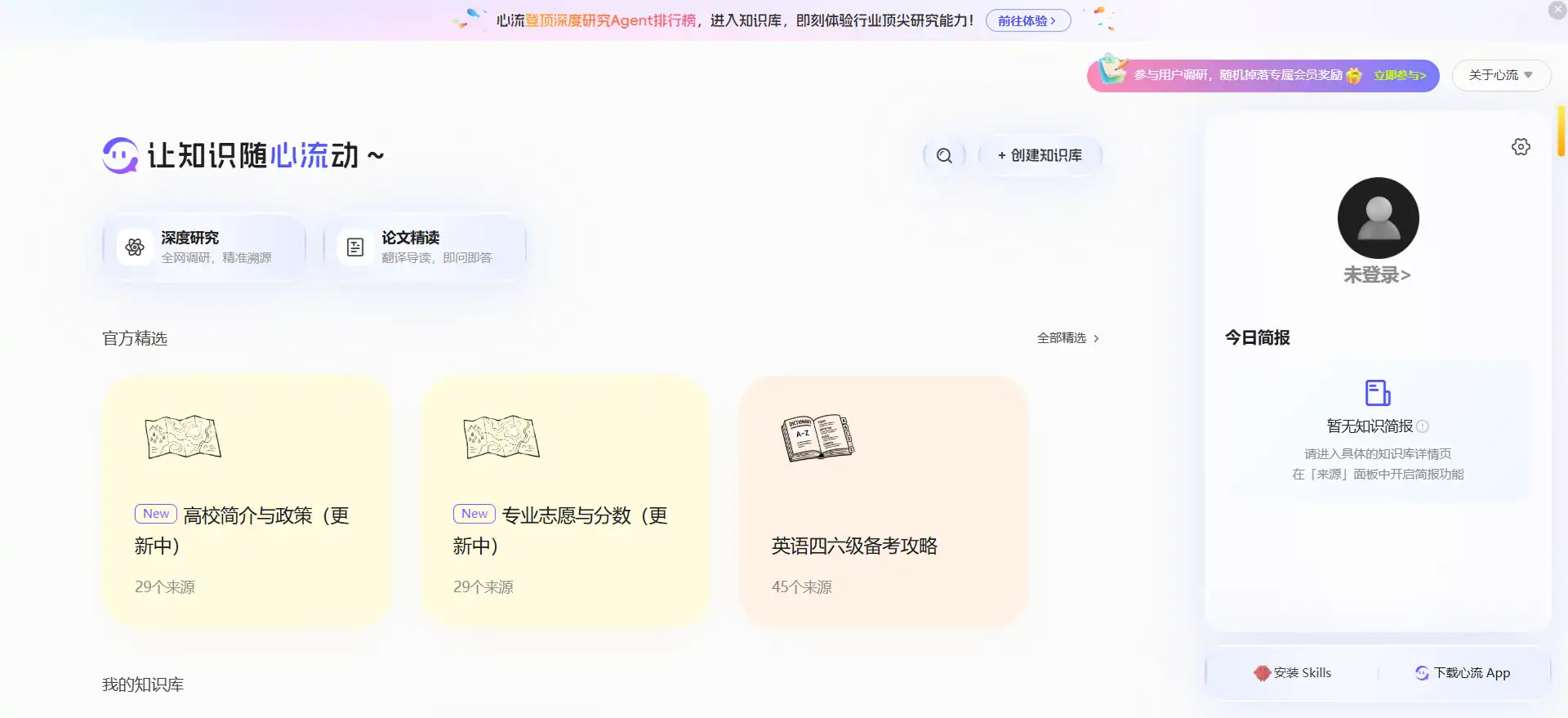
iFlow is an AI productivity platform within Alibaba's technology ecosystem, offering capabilities such as AI search, in-depth research, paper reading, AI-generated PPTs, and intelligent writing. Its iFlow CLI is a free terminal AI programming assistant that supports code analysis and generation, and is hailed as the "Chinese version of Claude Code." The platform covers web pages, browser plugins, and mobile apps, aiming to improve efficiency in academic research, workplace work, and development.
2026-07-14Wen Xiaobai – A full-scenario AI-powered intelligent writing and creation assistant, making writing simpler.
70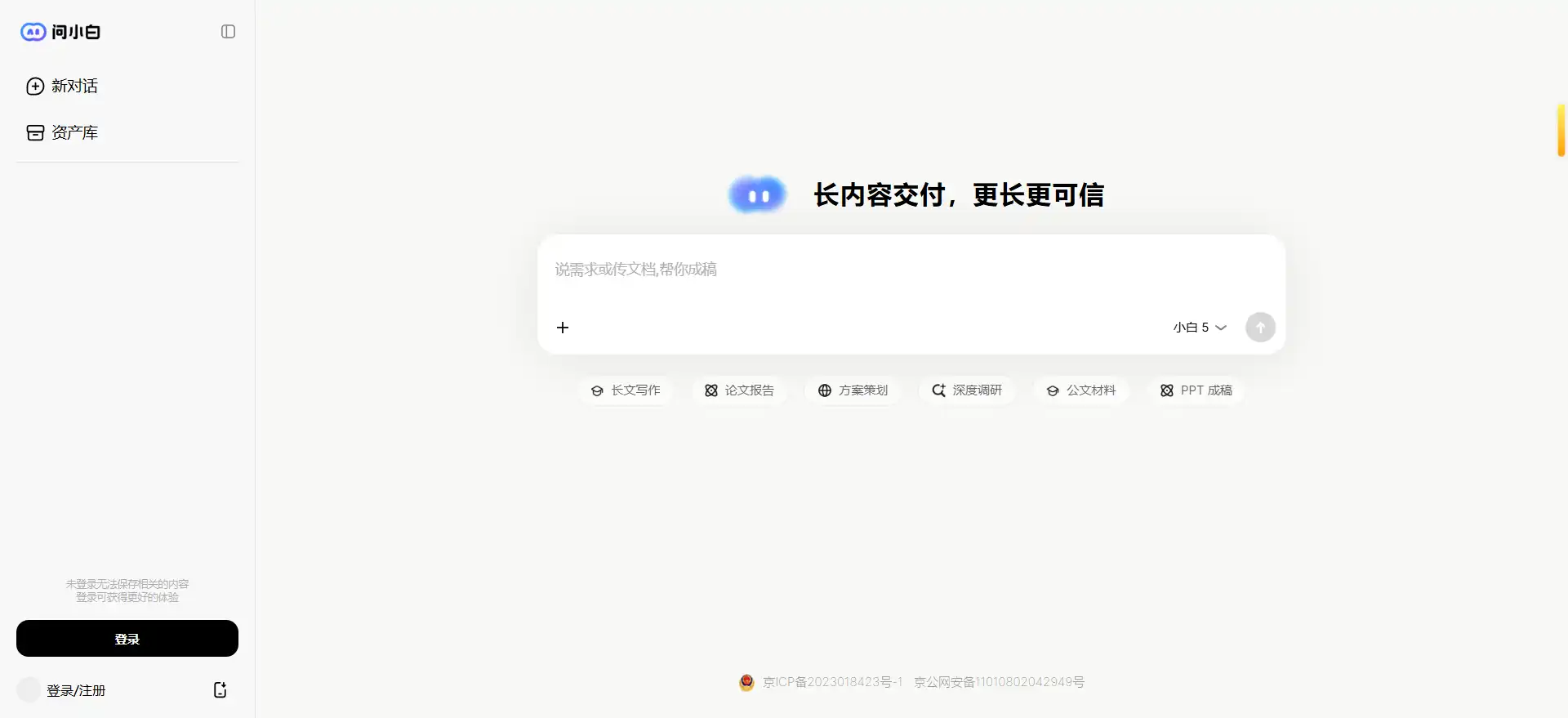
WenXiaobai is an AI-assisted tool developed by the Palu AI team, focusing on all scenarios of office work, creative writing, and learning. It integrates core capabilities such as intelligent question answering, copywriting generation, content optimization, and data organization, providing self-media creators, marketers, and professionals with end-to-end AI assistance from topic selection and outline generation to full-text polishing. The platform also offers a massive database of sample essays covering official documents, academic writing, literature, and other fields, helping users efficiently complete various writing tasks.
2026-07-14Qianbi Writing - AI Paper Writing & Plagiarism Reduction Platform
69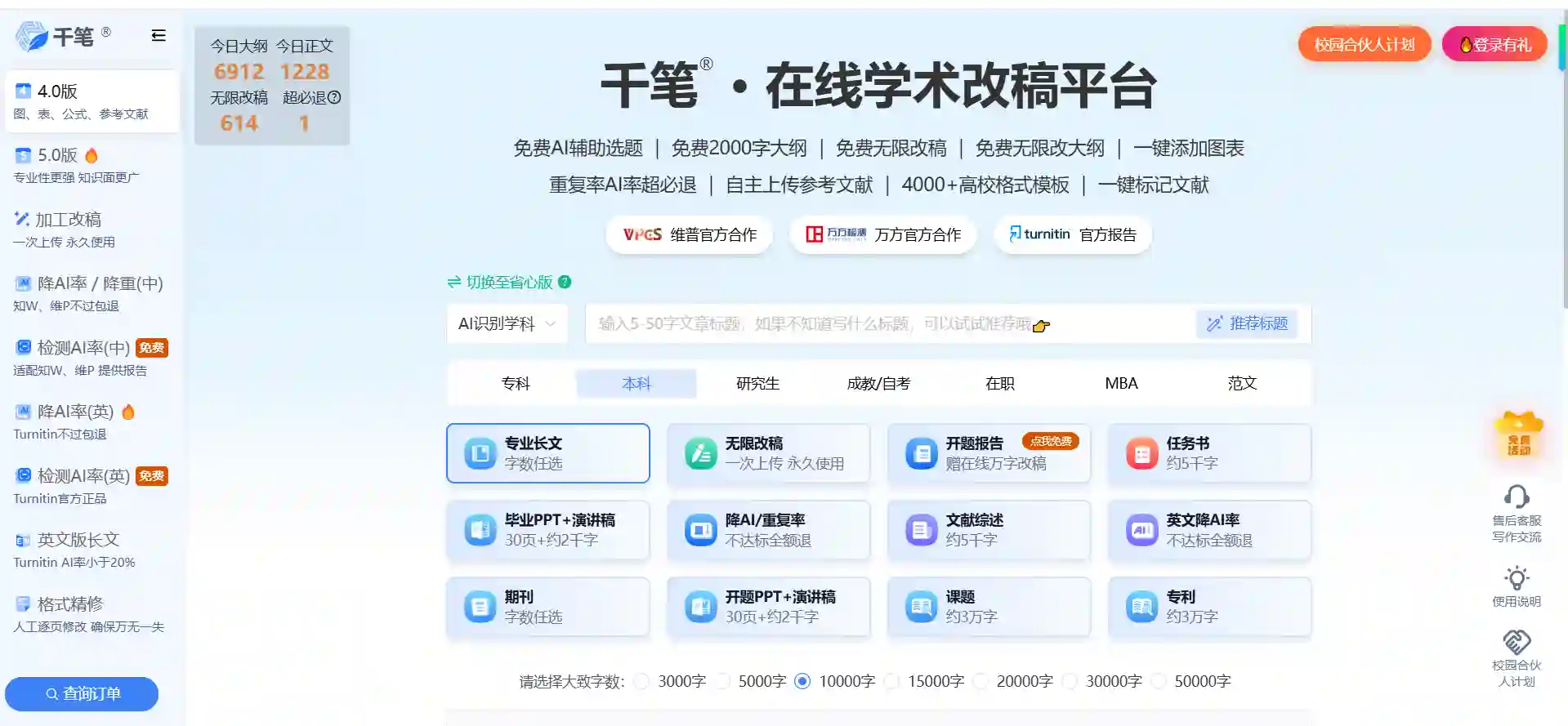
Qianbi Writing is an AI-powered academic paper writing platform that offers end-to-end services from outline generation to full-text creation. It can produce 30,000 words of high-quality paper in just 10 minutes, supporting real web data, charts, formulas, and code. The platform features unlimited 2,000-word three-level outlines, and includes PPT, proposal reports, task books, and 40 real references. It also provides strong AI text and plagiarism reduction capabilities, with a money-back guarantee if AI or similarity rates are not met, earning recognition from supervisors.
2026-07-22Spark Knowledge Base Document Q&A
68
Spark Knowledge Base Document Q&A is a document question-answering service built by iFlytek based on the Spark large model and knowledge base. It supports multi-document Q&A, document knowledge base management, source citation positioning, document summarization, and custom segmentation. It efficiently retrieves document information and accurately answers professional questions, suitable for enterprise knowledge management, academic research, legal consultation, and more, improving document processing and information access efficiency.
2026-07-20InternLM Big Model Platform for Efficient Open-Source AI Training and Inference
64
InternLM is an open-source large model platform developed by Shanghai Artificial Intelligence Laboratory, designed to provide developers, researchers, and enterprises with high-performance, low-barrier AI model training and inference services. It supports multiple model architectures, offers extensive pre-trained models, fine-tuning tools, and deployment solutions, emphasizing safety, controllability, and ease of use. Whether for academic research or commercial applications, InternLM helps users quickly build customized AI solutions, promoting the democratization of artificial intelligence technology.
2026-07-22Maomao Insect AI Thesis Writing Assistant - Free AIGC Plagiarism Check & Rewriting Tool
61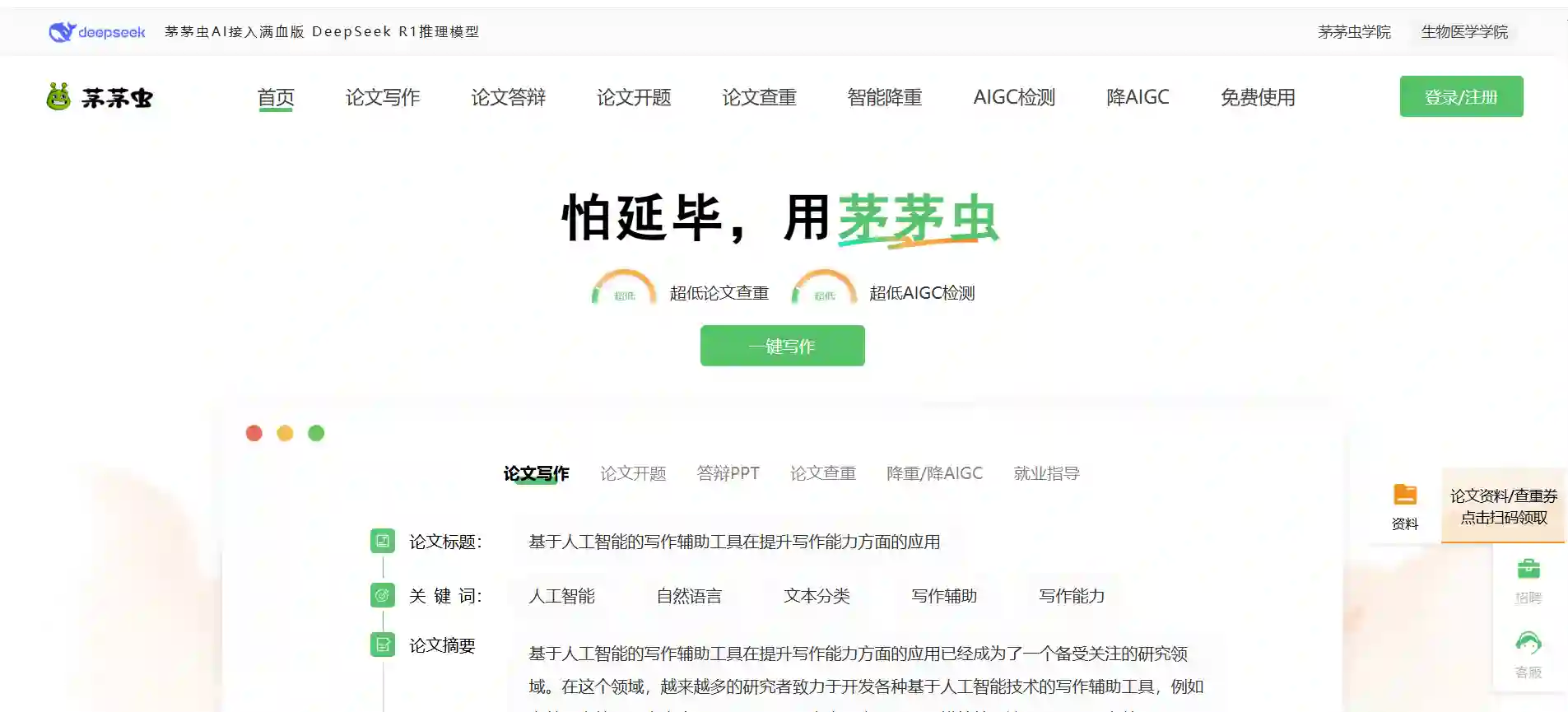
Maomao Insect AI Thesis Writing Assistant is an intelligent writing tool designed for college students and researchers. It sparks thesis inspiration within 5 minutes, searches over 500 million documents based on your academic background, and feeds relevant knowledge into the MMC model for accurate content generation. Features include smart continuation, real-time plagiarism check, error correction, rewriting, one-click citation, and AIGC detection, enabling efficient writing from proposal to defense while ensuring originality.
2026-07-22Little Green Whale Whale Spirit AI Scientific Literature Reader
61
Little Green Whale Whale Spirit AI is a specialized large model for scientific research, trained on over 180 million literature datasets and massive scientific parameters through deep learning. It features efficient information processing and precise knowledge extraction, covering 113 first-level disciplines with 160+ million academic papers, 250,000+ professional bilingual terms, 8.28+ million global research fund data points, and 50,000+ international journal data. Compared to the third generation, the fourth generation has comprehensively upgraded in long-text processing, translation accuracy, processing efficiency, and knowledge extraction precision. Unlike generic AI models like DeepSeek, Whale Spirit AI is more professional, accurate, and efficient in scientific research, significantly improving researchers' decision-making and productivity.
2026-07-20ChatDOC AI-Powered Document Assistant for Reading, Q&A and Extraction
61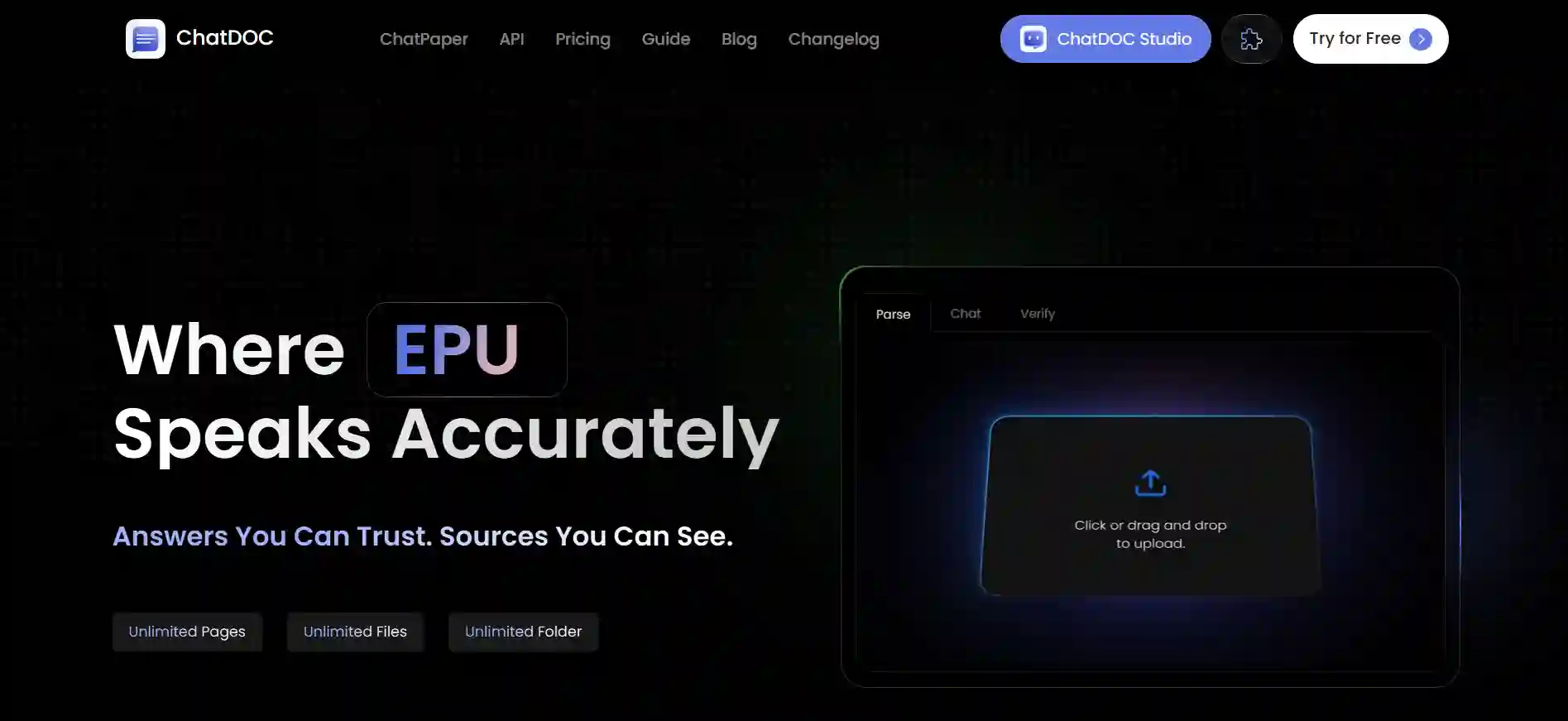
ChatDOC is an AI-powered document assistant that supports uploading PDF, Word, Excel, PPT and other formats. It enables users to quickly extract information, summarize content, and answer questions through conversation. Leveraging large language models to understand document structure, it provides accurate citation sources, ideal for academic research, legal contracts, business reports, and more, significantly boosting document processing efficiency.
2026-07-20Clever Humanizer - Advanced AI Text Humanizer & Anti-Detection Rewriting Tool
60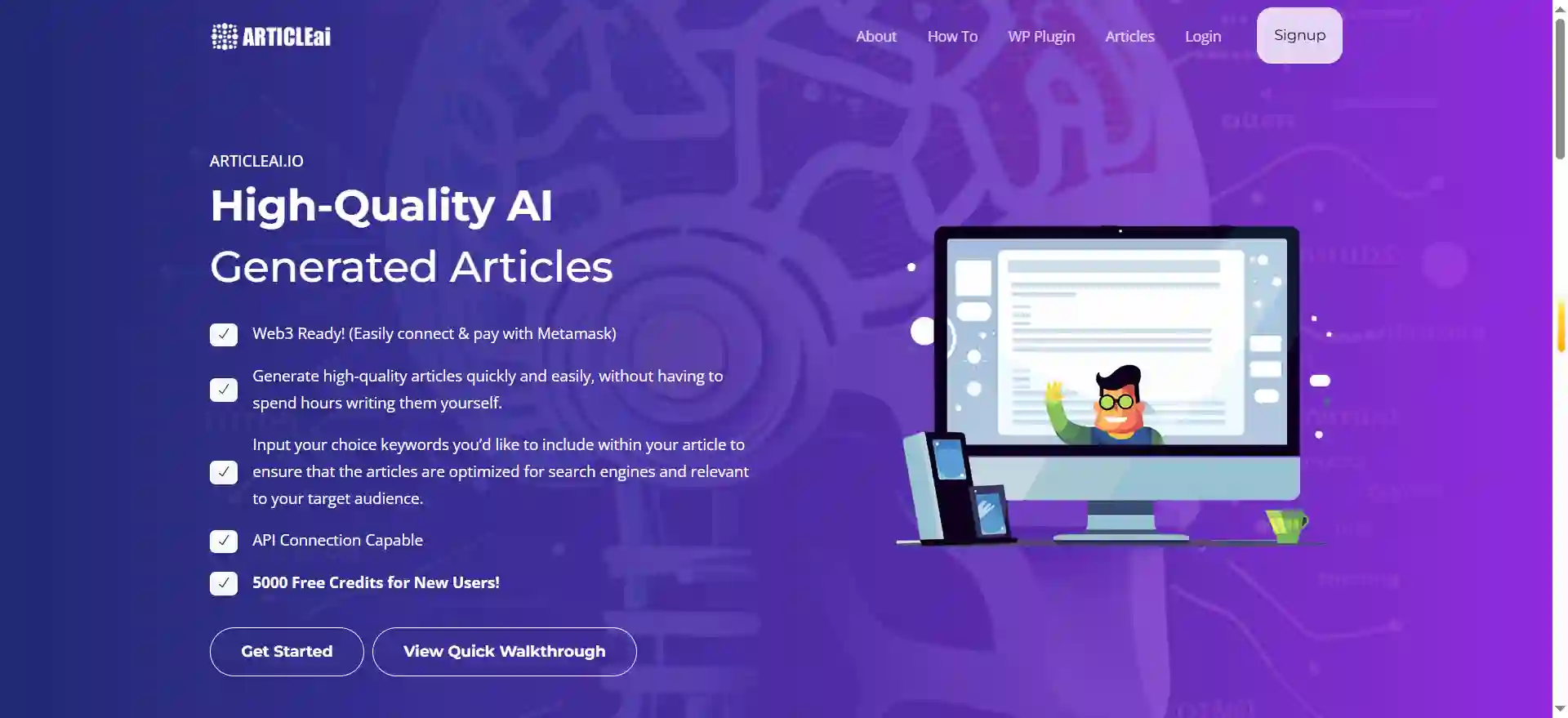
Clever Humanizer is a tool designed to transform AI-generated text into natural, fluent human writing. It uses smart rewriting techniques to effectively bypass various AI content detectors (such as GPTZero, Originality.ai, etc.) while preserving the original core information and context. Suitable for academic papers, blog posts, marketing copy, and more, it helps users humanize and de-AI content without sacrificing quality. With a simple and easy-to-use interface, it supports fast batch processing, making it a powerful assistant for content creators and academic writers.
2026-07-24Wordvice AI Writing Assistant: Free Grammar Check, Paraphrasing, Translation & Summarizer
60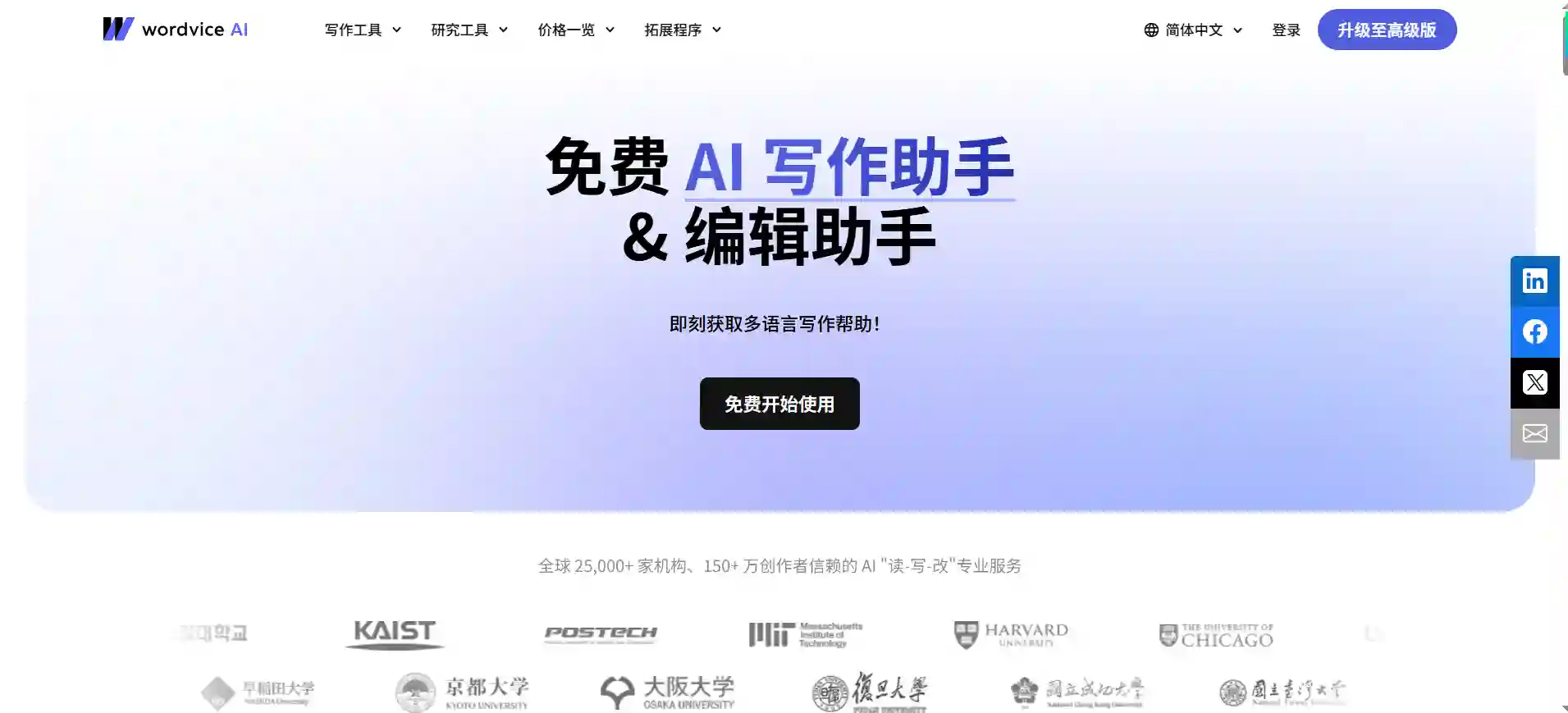
Wordvice AI is a free online intelligent writing assistant that offers comprehensive English grammar checking, paraphrasing, humanization tools, online translation, and AI summarization. It accurately proofreads grammar and spelling errors, improves phrasing and sentence structure for better fluency, and provides real-time, efficient feedback on style issues. Whether for academic papers, business emails, or everyday writing, Wordvice AI helps users achieve error-free expression and refine their writing style. It also includes practical tools like ChatPDF and a text editor, making it an ideal choice for enhancing English writing efficiency.
2026-07-22Wensi AI Assistant - Intelligent Writing, Official Document Generation, AI Search & Chat
59
Wensi AI Assistant is a powerful AI writing tool specializing in intelligent writing, official document generation, AI search, and AI conversation. Powered by advanced large language models, it helps users quickly produce high-quality articles, reports, official documents, and more. Whether for workplace documents, academic papers, or creative writing, Wensi provides precise assistance to boost writing efficiency. Integrated AI search makes information retrieval effortless, while AI chat mode supports interactive creation for a smooth and natural writing experience.
2026-07-22Koala AI Writing - Online Intelligent Office Document Writing Tool for Fast and Efficient Document Creation
59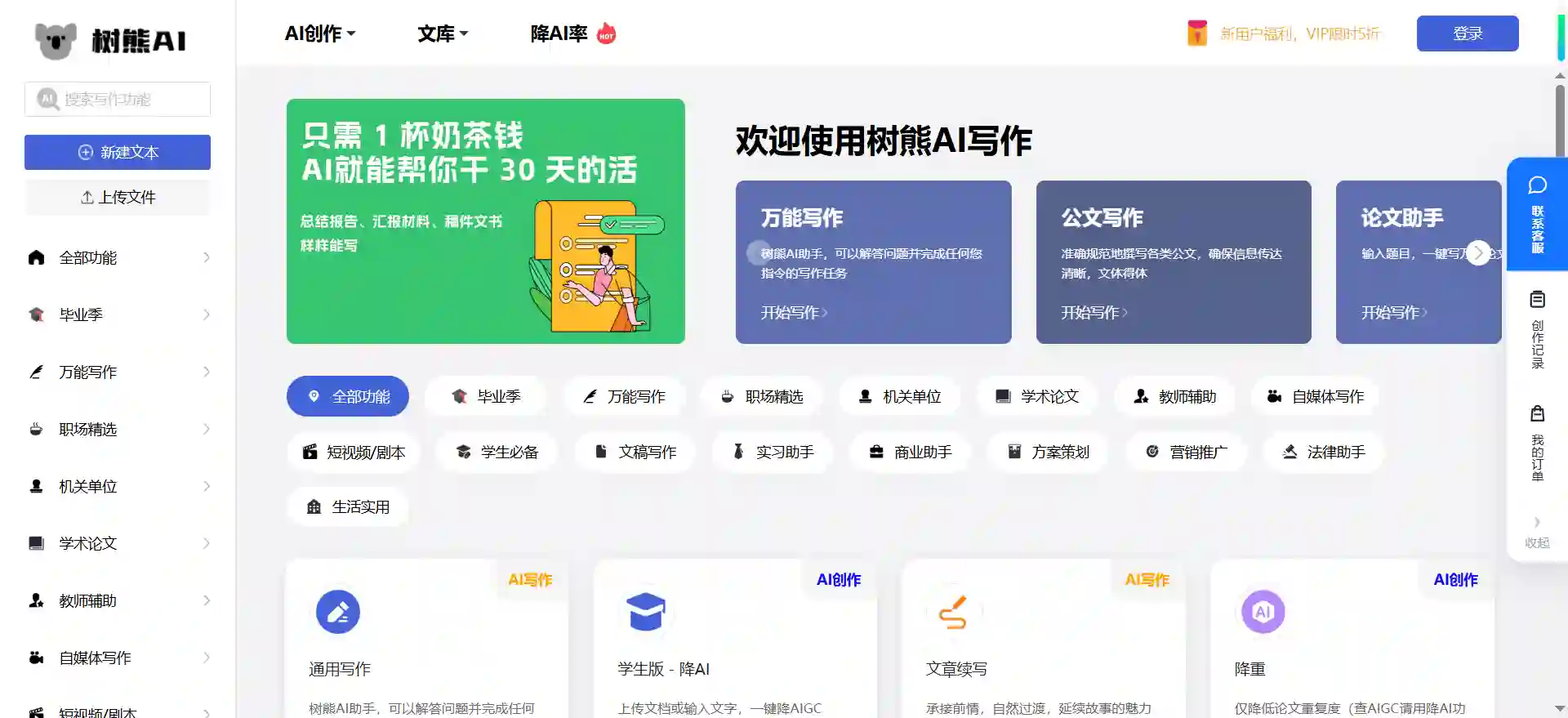
Koala AI Writing is an excellent online intelligent tool dedicated to fast and efficient completion of office document writing tasks. Leveraging powerful algorithms and intelligent technology, it enables users to easily create various types of documents, such as reports, proposals, and emails. Whether for work presentations or academic writing, Koala AI Writing provides comprehensive and reliable writing support, helping users save time, improve efficiency, and deliver convenient and intelligent solutions for work and study.
2026-07-22BiMuYu English Academic Writing Tool - Native-Like Language Refinement for Research Papers
57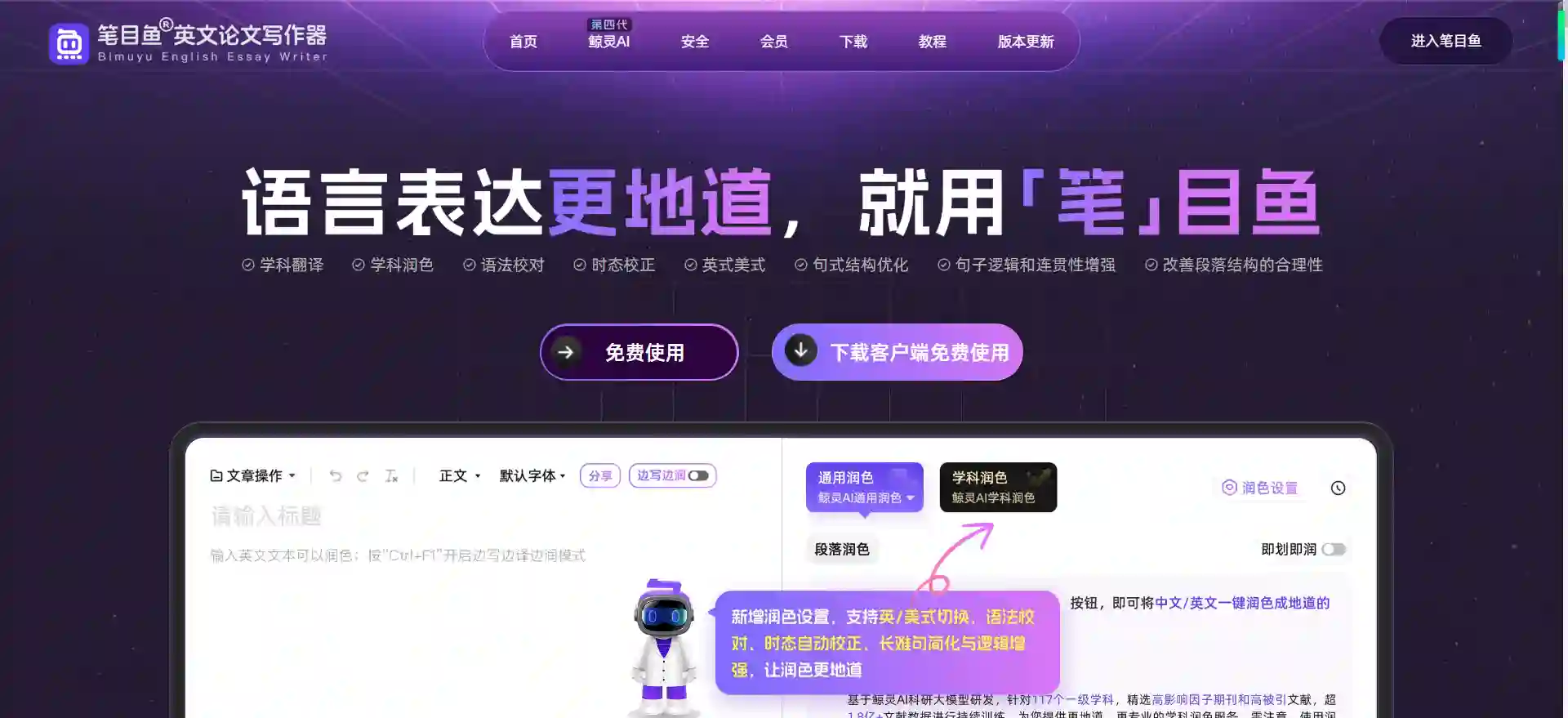
BiMuYu English Academic Writing Tool is a specialized assistant designed for researchers to enhance the naturalness and professionalism of their English academic writing. Covering 117 primary academic disciplines, it offers customizable grammar checking, tense correction, and British/American English polishing preferences. Built-in features include discipline-specific translation/refinement, high-scoring SCI example sentences, and modular sentence patterns, comprehensively improving grammar, vocabulary, and sentence structure. Ideal for non-native English speakers, it currently provides a downloadable client with online customer service and WeChat official account support.
2026-07-22LittleFrog.ai - Your Intelligent Writing Partner with Multiple AI Models and Voice Integration
55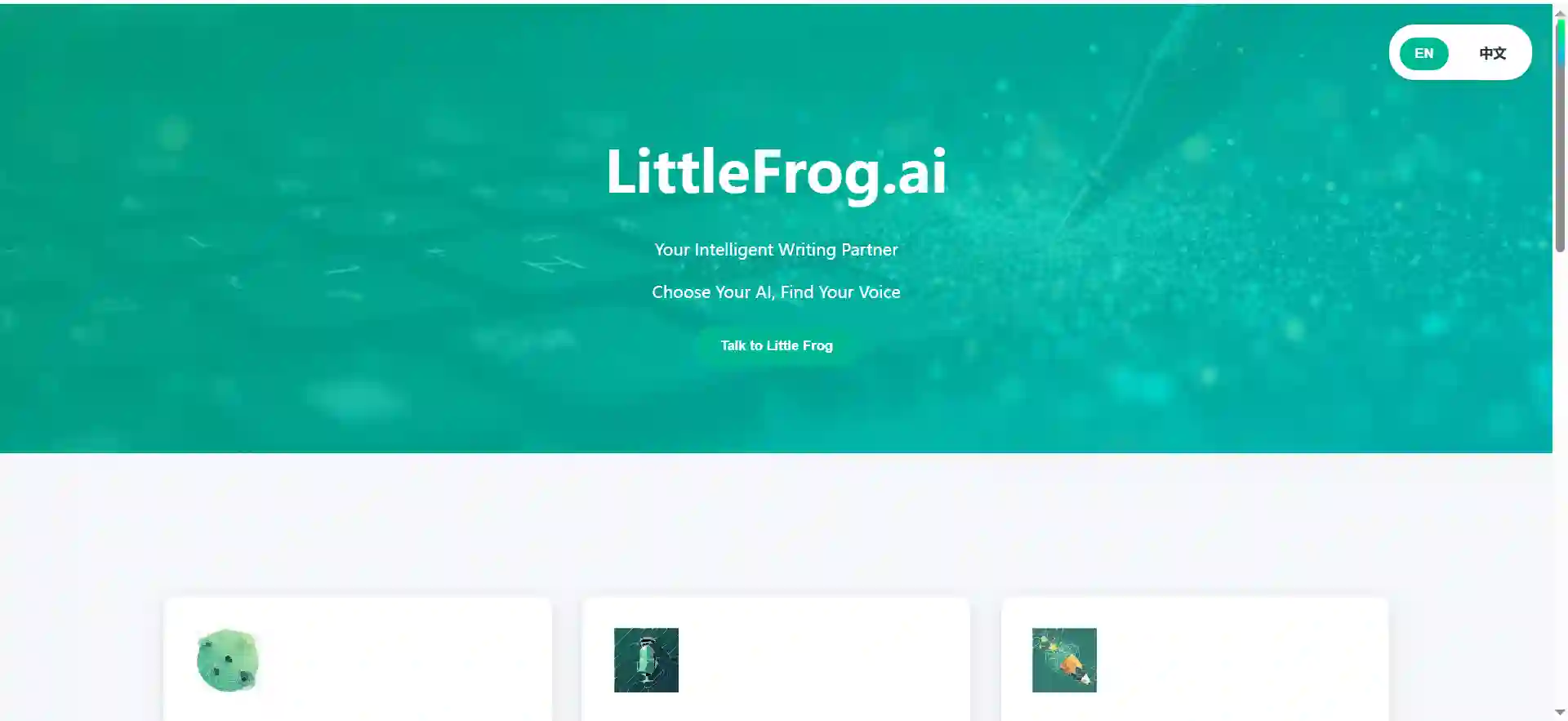
LittleFrog.ai is an advanced AI writing assistant featuring multiple language models, voice integration, and creative tools. It supports story development, article writing, marketing copy, academic writing, poetry creation, and technical documentation, allowing users to choose the perfect AI for their specific needs. Highlights include voice integration (transforming spoken ideas into polished text), character development, world building, story management tools, and professional features like content planning, SEO optimization, and technical writing support. Upcoming features include real-time collaboration, multi-language support, advanced context memory, and team collaboration tools.
2026-07-22Wanneng Xiaoin - AI Knowledge Assistant & Personal External Brain with Document Learning, AI Writing, AI Book Creation and Academic Search
55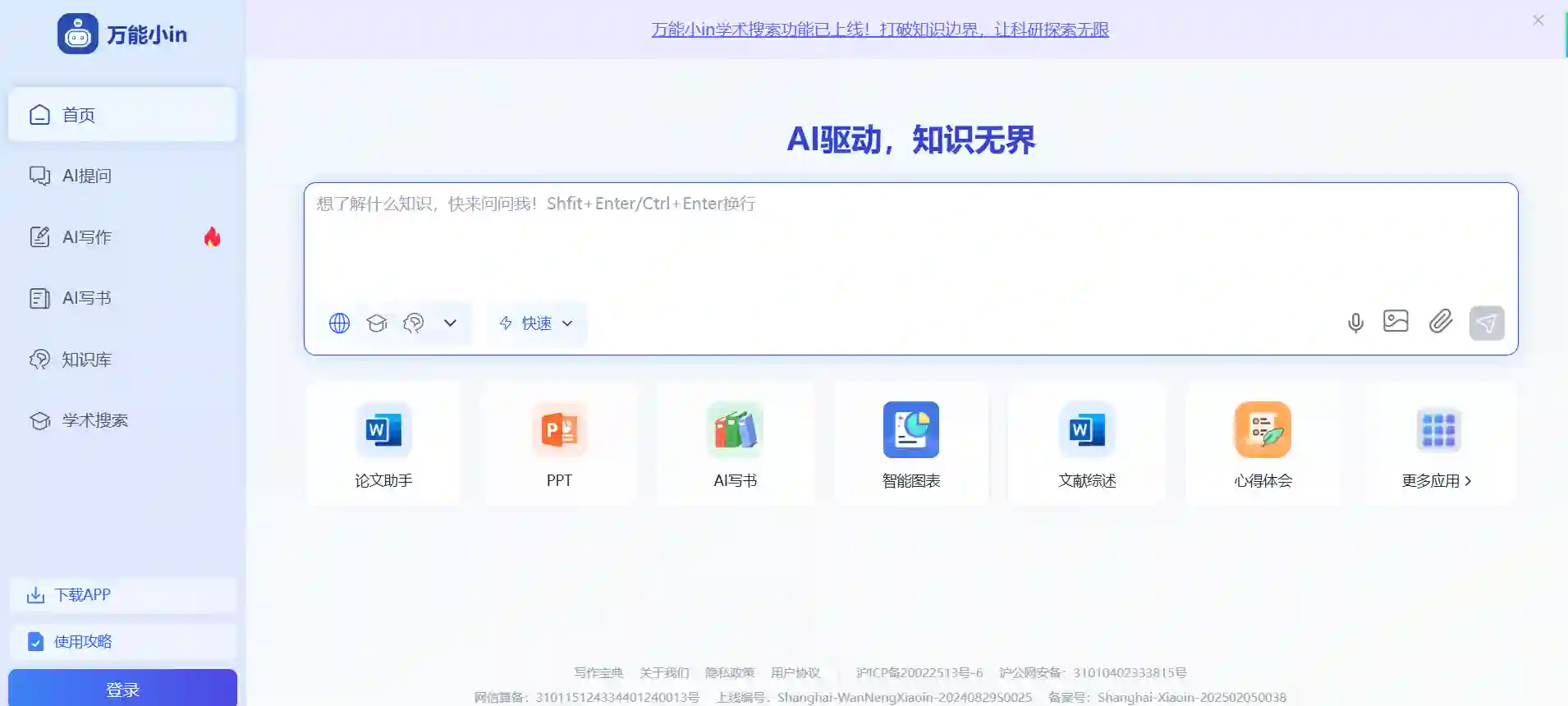
Wanneng Xiaoin is an innovative AI knowledge assistant app, pioneering document learning, intelligent Q&A, long-form writing, and AI book creation based on personal knowledge bases. It's more than a tool—it's your AI learning companion. It supports quick generation of papers, PPTs, smart charts, literature reviews, reflections, and more, enabling everyone to have their own AI external brain and realize a new paradigm of human-machine collaborative creation.
2026-07-22Smodin Writer - AI-Powered Research Paper & Content Creation Assistant
55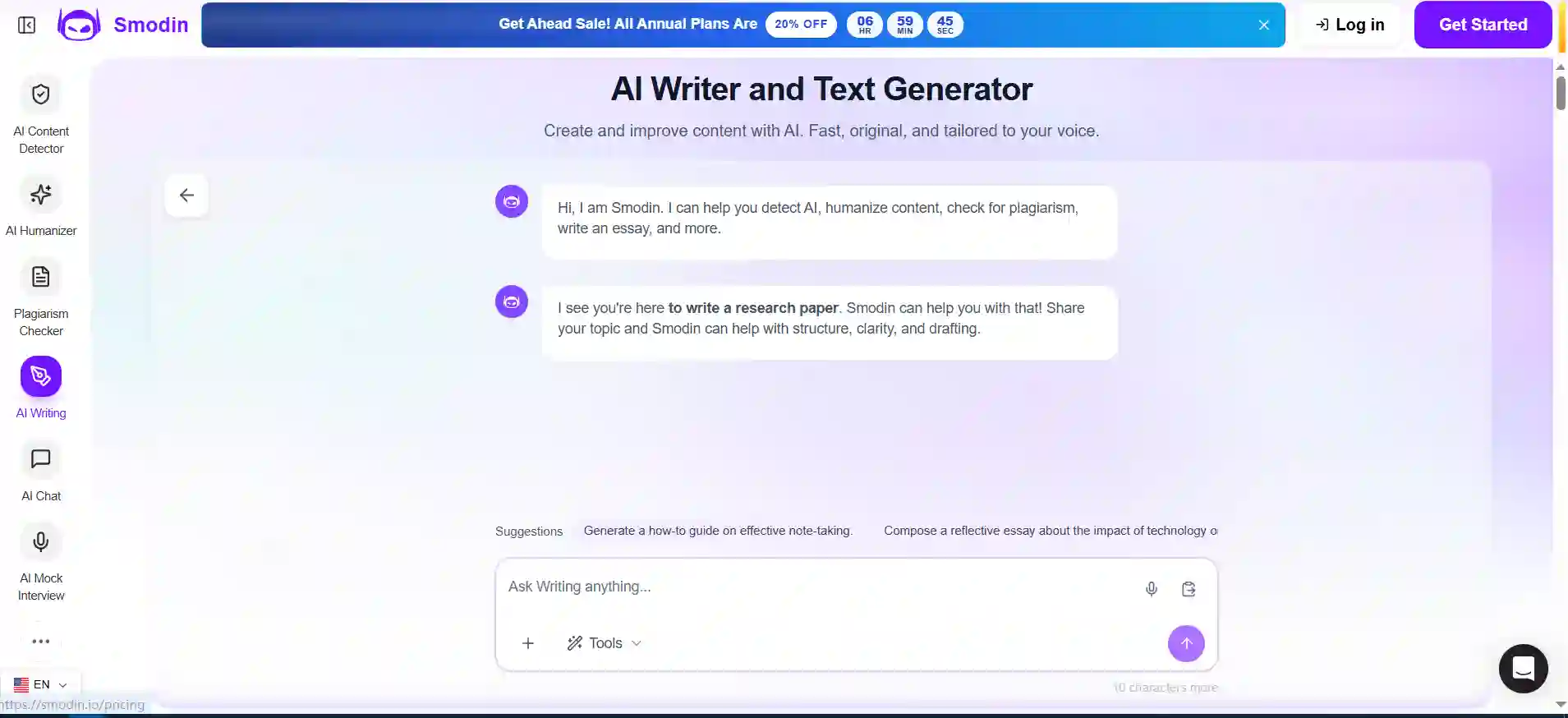
Smodin Writer is an AI-powered online writing tool designed to help users quickly generate high-quality research papers, academic articles, and various types of content. It integrates smart chat, content rewriting, citation generation, and grammar checking, supporting multiple writing modes for students, researchers, and content creators. Using natural language processing, Smodin understands user needs, offering structured outlines, paragraph expansion, and real-time collaborative editing to significantly boost writing efficiency.
2026-07-22GuangSuXie - AI-Powered Writing Tool for Full Text Generation, Outlining, Rewriting, and Expansion
54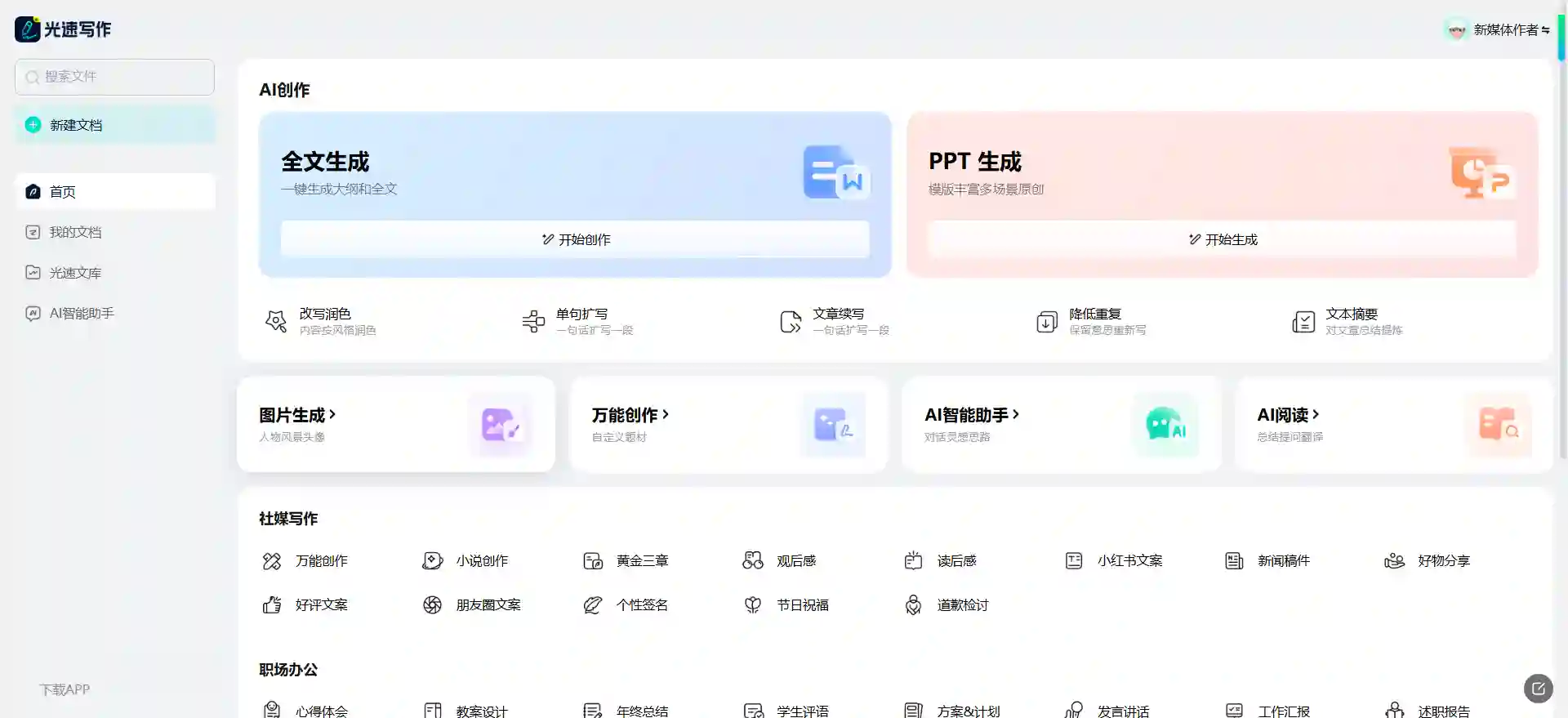
GuangSuXie is a cutting-edge AI writing software developed by Guangzhou Bomei, tailored for college students and professionals in workplace or government settings. It offers full text generation, outlining, rewriting, continuation, expansion, and AI Q&A, automatically producing required texts based on user input, covering academic papers, work reports, creative writing, and more, making writing easier and more efficient.
2026-07-22There are 7 more tools not shown. Try more specific keywords.