Search results for "Medical"
Found 58 results (3 tools · 5 articles · 50 skills). Sorted by relevance by SeoAIu.
AI Tools (3)
BaiXiaoYi - Baichuan Intelligent Medical AI Assistant for Online Consultation and Health Advice
181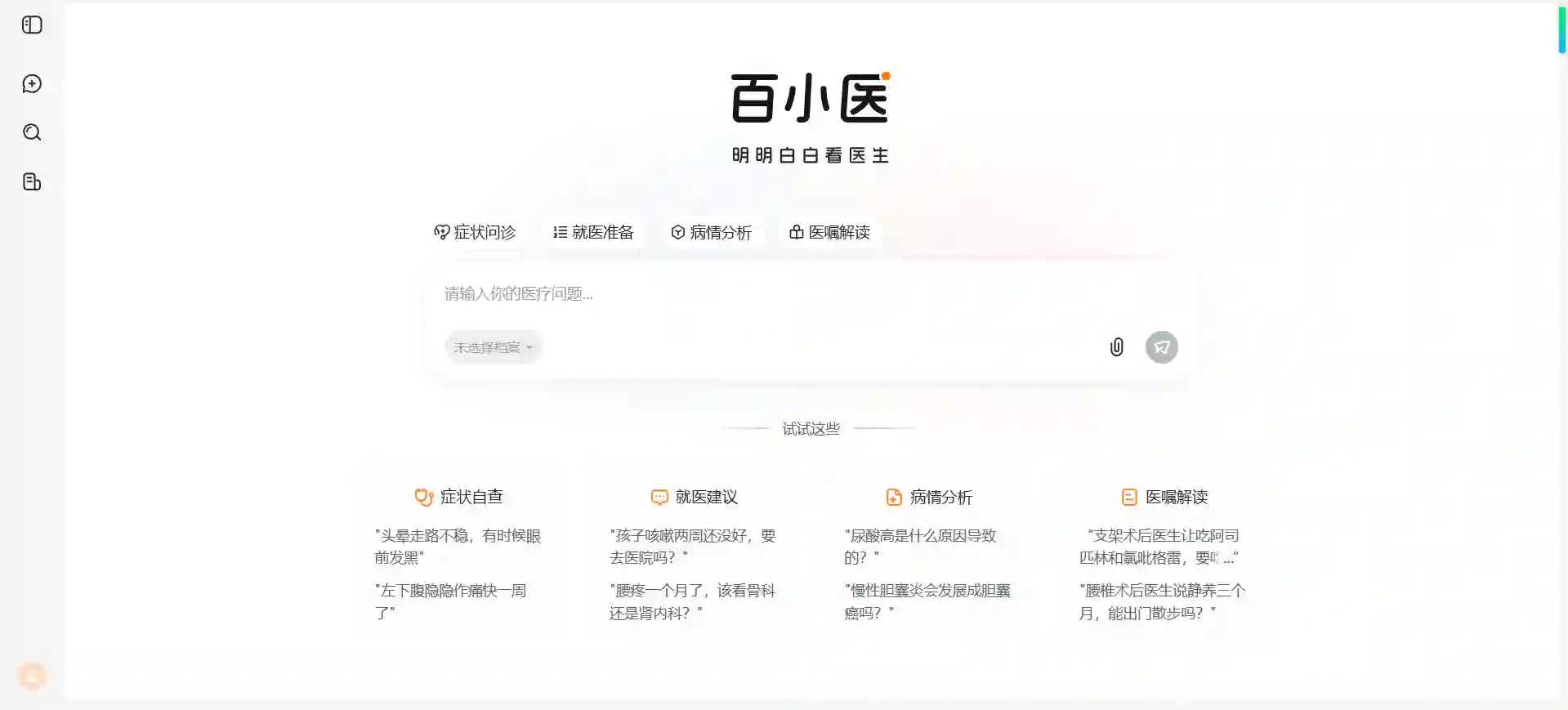
BaiXiaoYi is a medical and health AI assistant developed by Baichuan Intelligent, leveraging large language model technology to provide online consultation, symptom analysis, medication advice, and health knowledge queries. It simulates the doctor consultation process, integrating medical knowledge bases to deliver professional and caring health guidance, helping users understand their conditions and obtain medical recommendations. BaiXiaoYi aims to make reliable medical information accessible to everyone anytime, reducing healthcare resource pressure and improving health management efficiency.
2026-07-22PubMedQA—an "AI benchmark" specifically designed for biomedical question answering; only by comprehending research papers can an AI truly pass the "Medical Turing Test."
164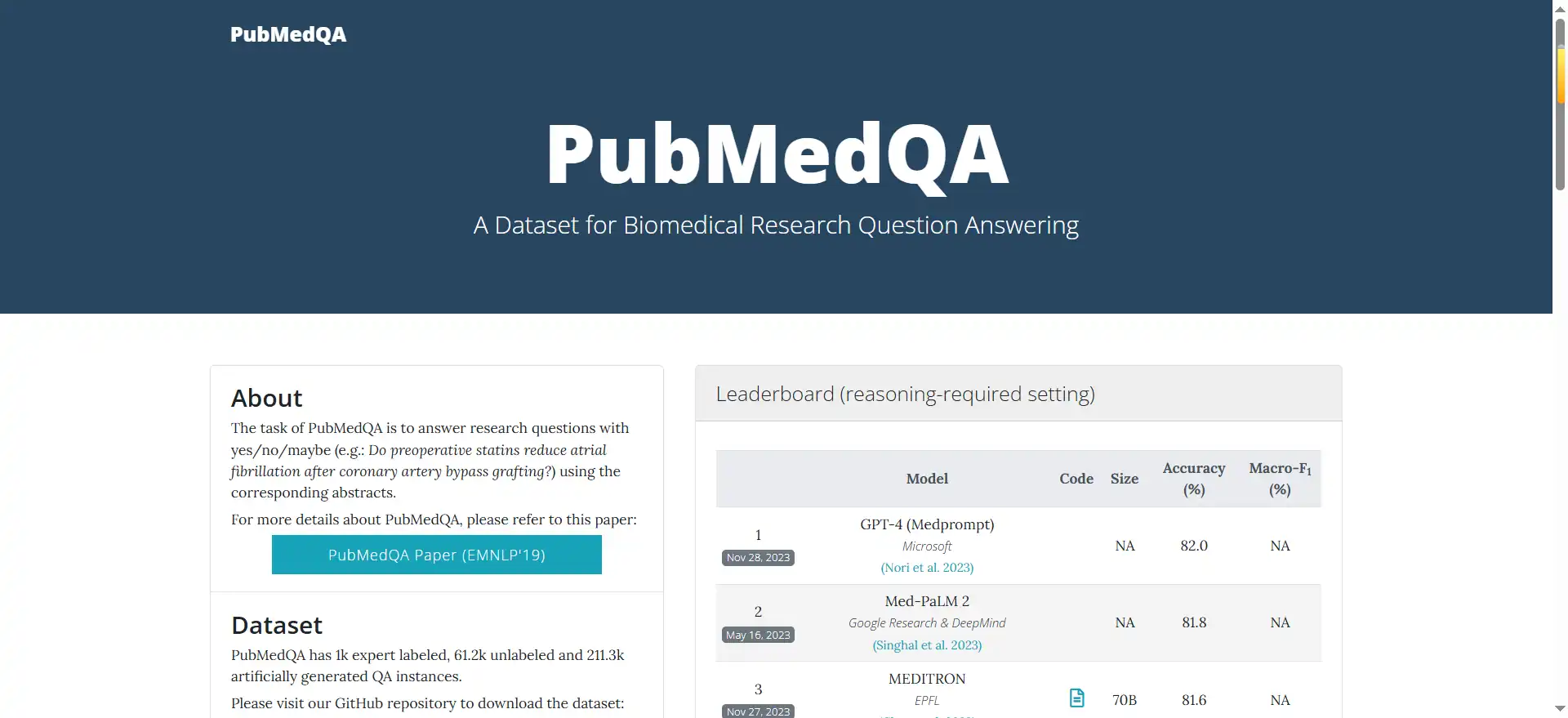
PubMedQA is the first question-answering dataset requiring reasoning over biomedical research texts; it was released in 2019 by institutions including the University of Pittsburgh. The task involves answering "Yes," "No," or "Maybe" questions based on PubMed abstracts. Comprising 1,000 expert-annotated samples and 211,000 artificially generated ones, the dataset aims to evaluate the ability of AI models to comprehend and reason about complex medical literature. It is widely used to benchmark the performance of large language models in the medical domain.
2026-07-10Miaopian AIPPT - AI-Powered One-Click PPT Generation, Word/PDF to PPT, Smart Formatting
100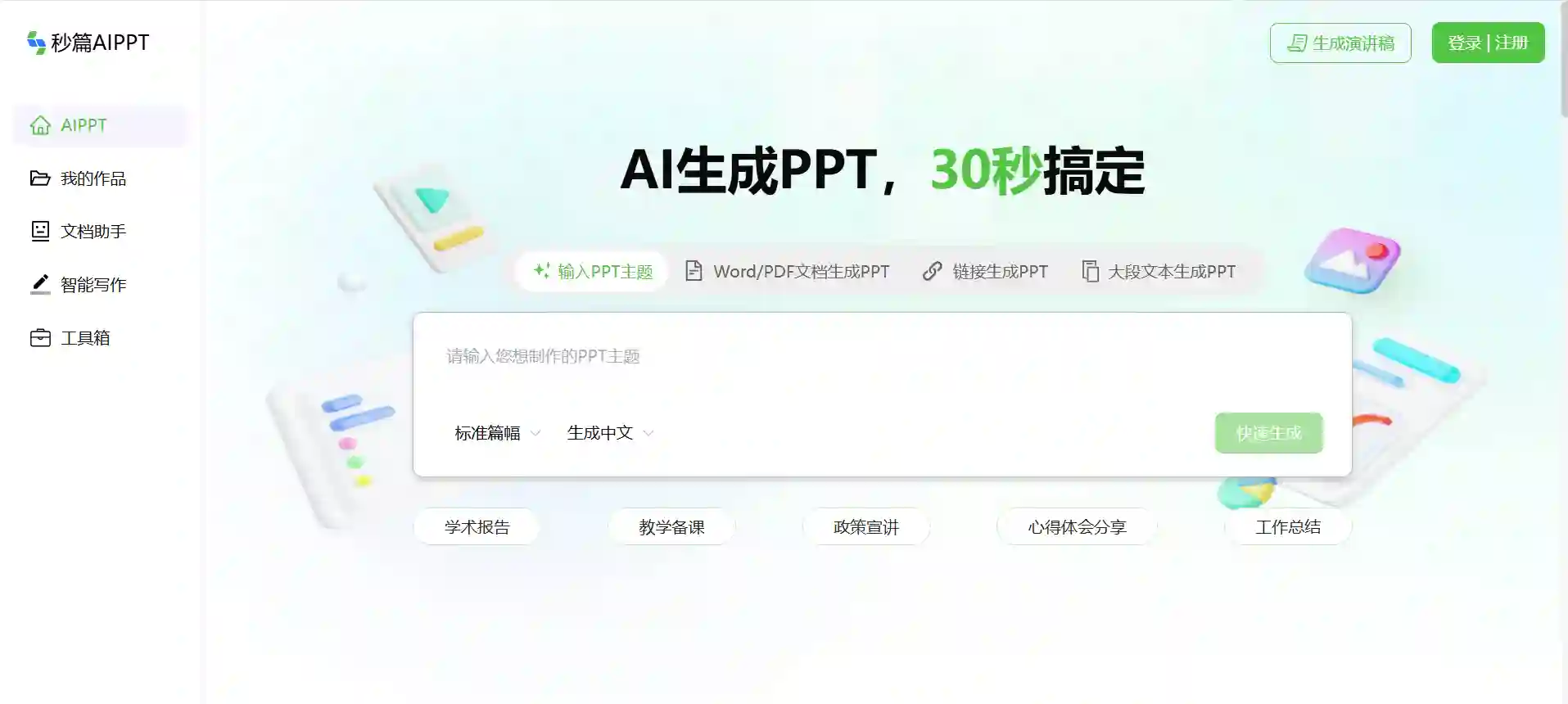
Miaopian AIPPT is an AI-powered PPT generation tool that supports one-click outline creation, Word-to-PPT, PDF-to-PPT, and AI-generated speech scripts. It provides a vast library of beautiful PPT templates for education, medical, scientific research, business, thesis, and promotional purposes. With automatic formatting and beautification, users can easily create professional presentations without design experience, boosting productivity by simply inputting content.
2026-07-20AI News (5)
AI in Healthcare: 2026 Best Practices and Implementation Roadmap Explained
48
Introduction: Healthcare Is Undergoing a "Quiet" AI Revolution To be honest, over the past two years, I've visited numerous hospitals and medical technology companies, and my biggest takeaway is this—...
Best AI Medical Apps Compared: Top 5 Value Picks in 2026 Data Review
48
Introduction: AI Medical Apps — Are They Really Not a Waste of Money? Hey folks, don't scroll away just yet! I know that when you see the term "AI medical apps," what pops into your head isn't some te...
AI Healthcare Tools in 2026: An In-Depth Review & Practical Buyer's Guide
41
Introduction: Are AI Medical Apps a "Game-Changer" or a "Gimmick"? Honestly, by 2026, AI medical applications are no longer a novel concept. Open any app store and search "AI medical," and you'll find...
Best AI Medical Apps 2026: 5 Top Products Compared to Help You Choose
39
Introduction: AI Medical Apps — Not Just a Gimmick To be honest, a couple of years ago, seeing endless "AI Healthcare" ads everywhere, I was skeptical. After all, who hasn't been fooled by "smart diag...
Best AI Medical Templates Collection: 2026 Guide with Tips and Pitfalls to Avoid
35
Introduction: AI Medical Applications, From "Confusing" to "Indispensable" Folks, the longer I work in AI content, the more I realize a sobering truth: AI tools, no matter how powerful, are just advan...
Career Skills (50)

Healthcare PHI Compliance Skill
This skill focuses on Protected Health Information (PHI) compliance in the healthcare domain, helping developers and organizations ensure their AI agents and automation systems adhere to privacy regulations like HIPAA when handling sensitive medical data. It provides best practices for secure PHI handling, data masking methods, access control policies, and audit logging capabilities, suitable for healthcare, health tech, insurance, and bioinformatics scenarios to ensure data security and compliance.

HIPAA Compliance Skill
The HIPAA Compliance Skill is part of the ECC (Agent Harness Performance Optimization System), specifically designed to help AI agents and development tools meet the requirements of the Health Insurance Portability and Accountability Act (HIPAA). This skill provides guidelines, policies, and best practices for securely handling Protected Health Information (PHI), ensuring that AI applications developed in environments like Claude Code, Codex, Opencode, and Cursor comply with healthcare data privacy and security standards. Ideal for AI projects handling medical data, health tech applications, and healthcare IT systems.

Facility Hygiene Robot Skill
This skill belongs to the healthcare domain of the CivStack open skill library, specifically for robot roles in facility hygiene management. It defines standardized workflows for AI agents and robots to collaborate on cleaning, disinfection, and other hygiene tasks, ensuring medical environments meet high hygiene standards. The skill emphasizes human accountability boundaries, retaining human oversight and decision-making in automated operations. It is suitable for daily hygiene maintenance in hospitals, clinics, nursing homes, and other medical facilities, reducing manual workload and improving efficiency and safety through automation.

Legal Compliance Skill for Wound Assessment Nursing
A specialized skill designed for nurses to generate legally compliant wound assessment records automatically, providing standardized templates, legal reference citations, permission management, and audit trails to reduce medical dispute risks.

Emergency Nurse AI Agent - Simulate Emergency Nursing Knowledge and Decision-making
This is an AI Agent simulating the professional skills of an emergency nurse, developed based on the AgentSkills.io SKILL.md specification. It is part of the 100-Profession AI Agents database under the Medical & Health category. It can simulate triage, first aid, patient assessment, nursing procedures, and other core competencies of an emergency nurse, suitable for medical training, knowledge retrieval, and scenario simulation.

Legal Documenting Nursing Notes Skill - Standardized Documentation and Legal Risk Prevention Assistant
This skill provides medical nursing professionals with standardized nursing note templates and legal compliance checklists, helping users generate nursing records that meet hospital standards and legal requirements, reducing the risk of medical disputes. It includes documentation paradigms for common nursing scenarios, reminders for key time-point recordings, and explanations of legal disclaimer points.

Legal Compliant Perioperative Nursing Management Skill - Nurse Decision Support
A Skill project from lev-os/agents GitHub repositorydesigned for perioperative nursing scenariosIntegrates legal regulations with nursing workflows to help nurses efficiently manage pre-intra-and post-operative phasesensuring medical complianceEasy installation via npx and runnable inproviding structured nursing points and legal risk alerts.

Nursing Assistant AI Agent Skill: Transform Nursing Expertise into Intelligent Assistant
This is a Nursing Assistant skill based on the domain-experts project on GitHub. It defines professional roles and knowledge bases to convert human nursing expert experience and workflows into AI agents, helping users quickly get nursing advice, perform daily care tasks, and learn nursing knowledge. Suitable for medical institutions, nursing students, and home care scenarios.

Elderly Care Escalation: Automated Risk Detection and Notification
The escalamiento skill in cuidavoz/elderly-care-engineering-app handles critical escalation scenarios in elderly care systems. When anomalies are detected (fall, abnormal vitals), it autonomously triggers escalation workflows, notifying caregivers, family, or medical services via SMS, calls, or app push. Leveraging event-driven agents, it logs all actions and supports configurable escalation paths. Ideal for smart elderly care in communities, homes, and nursing homes.

Eldercare Exercise — Voice-Guided Bedridden Workout with Auto Timer and Level Adjustment
A lightweight exercise skill designed for elderly individuals who are bedridden or can sit. It uses TTS to guide each movement step by step, with automatic counting, rest breaks, and three difficulty levels (bedridden, sitting, standing with support). Supports daily cron at 9 AM or chat triggers, integrates with Home Assistant media player for voice output. Disabled by default; requires family activation and medical clearance.

Medical Appliance Technician AI Agent: Domain Expert Skill for Equipment Maintenance and Support
This skill converts the expertise of medical appliance technicians into an AI agent, covering medical device maintenance, fault diagnosis, calibration procedures, and safety standards. Users can quickly access equipment operation guides, repair workflows, and industry regulations through the skill interface, ideal for medical equipment management, clinical engineering support, and technician training.
Quality Nonconformance Management Skill for Root Cause Analysis and CAPA Handling
This skill provides codified expertise for quality nonconformance management in regulated manufacturing, covering NCR lifecycle, root cause analysis, CAPA systems, and supplier quality management. It helps users investigate product defects, process deviations, interpret SPC data, and audit supplier quality in industries like medical devices, automotive, and aerospace.
Cleaning Manual Generator
Cleaning Manual Generator is an AI skill specifically designed to automatically generate cleaning operation manuals. It can quickly produce well-structured and professional cleaning manuals based on user-provided cleaning scenarios, equipment types, and cleaning requirements. This skill supports various cleaning scenarios including home cleaning, industrial cleaning, medical cleaning, etc., and automatically includes safety precautions, cleaning steps, required tools, and cleaning agent lists. Through intelligent templates and natural language processing technology, the Cleaning Manual Generator significantly improves the efficiency and quality of manual creation, making it particularly suitable for property management companies, cleaning service providers, hotel managers, and home users.
Automated Manufacturing Surveillance Skill: AI-Powered Production Quality Deviation Detection and Alert
KSB-D06-K0041 is an AI skill focused on automated manufacturing surveillance, monitoring production processes in real-time to identify quality deviations. It covers the medication errors and quality domain, supports FDA, ICH and other regulatory requirements, and is applicable to pharmaceutical, medical device and other manufacturing industries, helping companies detect and manage quality risks during production.

Managing Spinal Cord Injury Rehabilitation
Managing Spinal Cord Injury Rehabilitation is a skill designed to assist medical professionals, patients, and their families in managing the rehabilitation process of spinal cord injuries. Based on the latest medical guidelines and research, it provides personalized rehabilitation plans, progress tracking, complication prevention, and resource recommendations. Core features include assessing patient status, setting rehabilitation goals, monitoring recovery progress, offering daily care advice, and facilitating multidisciplinary team collaboration. Use cases span hospital rehabilitation departments, community care centers, and home environments, aiming to improve patient quality of life and promote functional recovery. Through intelligent data analysis and reminder functions, it helps users efficiently manage complex rehabilitation workflows.

Managing Range of Motion Assessments
The Managing Range of Motion Assessments skill is designed for legal or medical contexts, assisting users or agent systems in recording, tracking, and managing evaluation data of human joint range of motion. Its core features include creating assessment records, storing measurements (such as angles and mobility), generating reports, and supporting compliance reviews. It is applicable in scenarios like rehabilitation therapy, work injury assessment, and forensic evaluation, ensuring data accuracy and traceability. By standardizing processes, it reduces human errors and improves work efficiency. As part of a personal agent dotfiles configuration, this skill can be integrated into automated workflows to simplify complex data management tasks.

Managing Traumatic Brain Injury Rehabilitation
This skill focuses on managing the rehabilitation of patients with traumatic brain injury (TBI), providing comprehensive guidance on legal, medical, and nursing aspects. Core features include assessing rehabilitation needs, developing personalized treatment plans, coordinating multidisciplinary teams, and monitoring recovery progress. It is suitable for healthcare professionals, legal advisors, patient families, and rehabilitation center managers, helping ensure patients receive holistic and compliant rehabilitation services. By integrating the latest research and best practices, this skill aims to optimize recovery outcomes, reduce complications, and support patients in returning to society.

Creating Rehabilitation Treatment Plans
This is an Agent skill specifically designed for the legal domain, aimed at helping users create professional rehabilitation treatment plans. Developed based on the lev-os/agents project on GitHub, it provides structured templates and guidance to ensure the plans comply with legal and medical standards. Users can quickly generate personalized, compliant rehabilitation plans, suitable for medical evaluations in legal cases, workers' compensation, personal injury claims, and more. The skill includes detailed steps, checklists, and reference materials to help users avoid common mistakes and enhance the professionalism and executability of the plans.

Managing Pediatric Rehabilitation Skill
This skill is based on the open-source repository lev-os/agents on GitHub, focusing on the field of pediatric rehabilitation management. It provides a set of tools and methods for managing and optimizing pediatric rehabilitation processes, including rehabilitation plan formulation, progress tracking, and effect evaluation. Suitable for medical rehabilitation institutions, pediatricians, rehabilitation therapists, and individual users who need to manage children's rehabilitation projects. Through automated and structured workflows, it helps users efficiently organize rehabilitation resources, record rehabilitation data, and generate visual reports, thereby improving the scientific nature and efficiency of rehabilitation management.

Legal Rehabilitation Treatment Plan Creation Skill - Automatically Generate Personalized Rehabilitation Treatment Plans, Enhancing Legal Compliance and Medical Efficiency
This skill focuses on creating rehabilitation treatment plans in the legal domain, aiming to assist legal professionals or medical institutions in automatically generating personalized rehabilitation treatment plans that comply with legal standards. By integrating standardized medical and legal templates, the skill quickly generates complete plans including treatment goals, methods, timelines, and risk assessments. Suitable for scenarios such as workers' compensation, medical disputes, and criminal rehabilitation, it significantly improves document preparation efficiency and compliance while reducing manual errors.

Managing Cardiac Rehabilitation Skill - Legal Compliance and Medical Process Automation Agent Skill
This skill is designed for legal and medical domains, automating legal compliance checks, document generation, and patient data tracking in cardiac rehabilitation processes. It integrates healthcare regulations, patient privacy protection (e.g., HIPAA), and monitoring of rehabilitation plan execution, helping professionals efficiently handle legal documents and operational standards related to cardiac rehab. Suitable for hospital legal advisors, rehab center managers, and medical compliance teams, aiming to reduce legal risks and improve rehabilitation management efficiency.

Managing Pain Rehabilitation Legal Skill: Professional AI Assistant for Chronic Pain and Rehabilitation Legal Consultation
This skill is designed for legal professionals, focusing on legal consultation in the field of chronic pain management and rehabilitation. It helps users quickly retrieve relevant laws, regulations, case analyses, and rehabilitation policies, providing compliance advice for pain rehabilitation. Suitable for handling workers' compensation, medical disputes, rehabilitation rights protection, and other scenarios, enhancing legal work efficiency and accuracy.

Managing Range of Motion Assessments - Legal domain Agent skill for recording and tracking range of motion measurement data
This skill is designed for the legal domain, helping users efficiently manage and track range of motion assessment data. In personal injury cases or workers' compensation claims, range of motion measurements are critical medical evidence. The skill supports recording measurements for various joints (e.g., shoulder, elbow, wrist, hip, knee) including flexion, extension, rotation, and other directions, and can be linked to specific events or time points, enabling lawyers or legal professionals to quickly retrieve and analyze data during case preparation. Through automated data entry and structured storage, it enhances the accuracy and efficiency of assessment reports.

Krumpphysio - Physiotherapy Assistant AI Skill for Patient Assessment and Rehabilitation Guidance
Krumpphysio is an AI-assisted skill designed for physiotherapists, aimed at helping therapists with patient assessment, creating personalized rehabilitation plans, and providing evidence-based medical recommendations. Integrated into the OpenClaw education platform, it supports symptom analysis, exercise prescription generation, progress tracking, and more through natural language interaction, suitable for clinical teaching and self-learning scenarios. The skill is based on the latest physiotherapy guidelines to ensure professional and reliable output.
epic-note: Draft Concise Patient-Portal Messages with AI
epic-note is an OpenClaw skill from the Tula open-source collection that helps patients draft clear, concise portal messages (e.g., for Epic MyChart, Oracle Health HealtheLife). It enforces triage-first (911 redirect on red flags), a single-ask discipline with a 150-word target and 220-word cap, canonical portal format from a reference file, and default clinician greeting from profile. The primary output is copy-paste ready text with a Subject line (urgency tier), greeting, one-sentence ask, brief context, optional bullets, and sign-off. Safety constraints: never auto-send, no clinical notes, no insurance/billing letters, direct answers to medical advice questions (not via draft), PHI stays in workspace. Includes reference schemas and evaluation suite.

Health Companion: Autonomous Local AI Assistant for Personal Health Management with Multi-Agent Orchestration
A health companion skill built on the Sofia framework, leveraging 40+ tools and 20+ LLM providers for autonomous, local AI health assistance. Features multi-agent orchestration, self-improving capabilities, and supports health advice, diet planning, exercise routines, medical Q&A, all offline with privacy protection.
Vomiting Diarrhea Emergency Assistant - Symptom Assessment & Diet Advice Skill
A Claude-powered skill integrated in Yorukusu iOS app. It helps users quickly assess severity of vomiting and diarrhea, provides hydration and first-aid tips, dietary adjustments, and when to seek medical care. Suitable for acute gastroenteritis, food poisoning scenarios, home care and self-management.

MCP Medical Appointments Skill: Agent-Based Appointment Management Demo
A demo skill for medical appointment management using MCP and Agent Skills framework. It demonstrates AI-powered appointment creation, availability check, and modification. Ideal for developers learning MCP skill development and testing AI Agent healthcare scenarios.

Symptom Checker - AI-Powered Symptom Assessment and Suggestion Tool
An AI-based symptom checker skill that allows users to describe their symptoms, then analyzes the data against a database of common illnesses to provide possible diagnoses, severity assessment, and medical advice. Helpful for initial self-evaluation but not a substitute for professional medical diagnosis.

Legal Patient Education Management Skill - Automated Compliance Check and Material Generation
A Skill project on GitHub designed for the legal healthcare field. It helps doctors, lawyers, and medical institutions automate the creation, distribution, and management of patient education materials with built-in legal compliance checks (e.g., informed consent, privacy protection) to ensure content meets local regulations. Supports template customization, version control, and team collaboration, significantly boosting productivity.
There are 20 more skills not shown.