Industry Background: The AI Wave Has Truly Reached Every Corner
Honestly, looking back from the tail end of 2025, my biggest takeaway is this: AI is no longer a concept confined to geek circles and s...
Article Contentreadonly
Industry Background: The AI Wave Has Truly Reached Every Corner
Honestly, looking back from the tail end of 2025, my biggest takeaway is this: AI is no longer a concept confined to geek circles and sci-fi movies. Like the mobile internet revolution before it, it has quietly permeated every capillary of our work and daily lives. If you're still asking "What can AI even do?", you're genuinely behind the curve.
According to the latest "Artificial Intelligence Development Report (2025)" released by the China Academy of Information and Communications Technology (CAICT), China's core AI industry is projected to exceed RMB 800 billion in 2025, a year-on-year growth of over 35%, driving related industries to surpass RMB 6.4 trillion. How staggering is that figure? Consider that just three years ago, it was under RMB 400 billion. The influx of capital, supportive policies, and declining computing costs—these three driving forces have catapulted AI from a "toy" to a bona fide "productivity tool."
On a more tangible level, almost all of my friends—whether in e-commerce, copywriting, design, programming, or financial analysis—now subscribe to one or two AI tools. That sense of urgency, the feeling that "not using AI means losing out," has become remarkably real in 2025.
Current State of AI Applications: A Qualitative Shift from "Trying It Out" to "Can't Live Without It"
If 2023 was the "ChatGPT元年" (Year One of ChatGPT) and 2024 was the chaotic "Battle of a Hundred Models," then 2025 is unequivocally the watershed moment for AI application deployment. Let's look at some concrete, observable changes.
1. Large Models Are No Longer Just "Chatbots"
A couple of years ago, most people used AI for writing weekly reports or generating jokes. But by 2025, large models have evolved into multimodal, highly reasoning super-assistants. For instance, models at the GPT-5 level can now directly understand your screen content, operate software for you, and even execute complex tasks across different apps. Just last week, I used an AI tool to automatically organize a month's worth of invoices—sorting, calculating, and generating reports without me lifting a finger. The feeling? Simply seamless.
2. Enterprise Applications Enter the Deep End
According to Gartner's predictions, by the end of 2025, 75% of global enterprises will have moved AI from pilot projects to full-scale production. China is keeping pace as well. In manufacturing, "lights-out factories" are no longer a novelty, with AI-powered quality inspection accuracy consistently exceeding 99.5%. In finance, intelligent risk control systems process tens of thousands of transactions per second, cutting bad debt ratios in half.
3. Computing Costs Have Become "Dirt Cheap"
This is what excites me the most. In 2023, training a mid-sized large model could cost millions of dollars. By 2025, thanks to the rise of domestic chips and mature inference optimization techniques (like quantization and distillation), inference costs have dropped by over 90%. What does this mean? It means small companies and individual developers can now afford to play with AI. I recently built a personal knowledge base using an open-source lightweight model—the monthly electricity cost is less than a cup of milk tea.
Core Scenarios: AI Is Reshaping These Five Industries
核心场景:AI正在重塑这五个行业
When I think about the most prominent AI application scenarios in 2025, these five immediately come to mind. Each one represents hard-won, real-world experience—not just theoretical talk.
Scenario 1: AI + Content Creation (Tripling Efficiency)
This is the scenario closest to us. Previously, writing an in-depth industry report could take three or four days. Now? Using AI tools for research, drafting, polishing language, and even generating accompanying images can be done in a fraction of the time. When I write AI articles myself, my typical workflow is: first, discuss the outline with AI, then have it list ten potential arguments, from which I pick the three most compelling to delve into. Efficiency has improved, but more importantly, the problem of creative block is solved—AI acts as your creative partner; you just need to handle judgment and refinement.
Video Creation: AI digital humans for broadcasting, automated editing, AI voiceovers—content creators will deeply relate. Work that used to require a whole team can now be done by one person with a few AI tools.
Marketing Copy: Generate copy tailored to different platforms (Xiaohongshu, WeChat Official Accounts, Douyin) in different styles, and even run automatic A/B tests to select the highest-converting version.
Scenario 2: AI + Programming (The Programmer's New Crutch)
Stop saying AI will replace programmers. The reality in 2025 is that AI has turned programmers into "conductors." With upgraded versions of GitHub Copilot or domestic tools like Tongyi Lingma, you write a function comment and it completes the code for you. I know an independent developer who, with AI assistance, launched a SaaS application solo in three months—a task that would have previously required a three-person team for half a year. Of course, this requires solid AI prompt engineering skills, because you need to ask clearly for AI to write clearly.
Scenario 3: AI + Customer Service (24/7 Availability with Maximum Emotional Value)
When you call customer service now, that sweet-voiced, gentle-toned representative is likely an AI. By 2025, intelligent customer service systems can accurately detect your emotions—apologizing when you're upset, speeding up their speech when you're in a hurry. According to Zhaopin data, companies using AI customer service have seen customer satisfaction rise by 23% and labor costs drop by 40%. The key advantage? It never argues with customers—something humans could learn from.
Scenario 4: AI + Healthcare (From Assistance to Diagnosis)
This one deserves a big thumbs up. In 2025, AI image recognition technology can assist doctors in detecting tiny lung nodules and early-stage retinal lesions, with accuracy in certain specialized areas even surpassing experienced physicians. I have a relative working at a county hospital where CT scans used to require expert consultation with a week-long wait. Now, AI performs initial screening, and only complex cases go to specialists—the efficiency gain is immense.
Scenario 5: AI + Education (Personalized Learning Finally Realized)
Confucius's vision of teaching students according to their aptitude has been realized by AI in 2025. Intelligent learning systems can now precisely analyze each student's knowledge gaps and dynamically generate personalized practice questions and AI tutorials. For example, if a child struggles with math, AI won't make them do all problems—it targets their specific error patterns and generates three similar but varied questions until they truly master the concept. This is far superior to my generation's brute-force "drill and kill" approach.
Implementation Roadmap: Don't Wing It—Follow This Path
Many business owners see AI and get excited, wanting to build their own large models right away. The result? Burned cash and nothing to show for it. In 2025, successful AI implementation is all about iterating quickly and achieving breakthroughs at single points. I've summarized a five-step roadmap for your reference:
Step 1: Finding the "Pain Point" Matters More Than Finding the "Hot Topic"
Don't chase buzzwords like the metaverse or brain-computer interfaces. Instead, look at which part of your company is most time-consuming, labor-intensive, and error-prone. Is it slow customer service responses? Tedious report processing? Or endless design revisions? Your pain point is your entry point.
Step 2: Selection Matters More Than Development
Off-the-shelf AI tools and solutions are already highly mature. If you can use an existing SaaS service (like cloud providers' APIs), absolutely do not train models from scratch. Only consider fine-tuning or customization when you discover that existing tools cannot solve your core business logic.
Step 3: Cultivate "AI-Native" Thinking
This doesn't mean everyone needs to learn Python—it means teaching employees to deconstruct problems using AI thinking. This brings me to AI skills training. In the 2025 job market, professionals who can write high-quality prompts command salaries roughly 30% higher than peers in equivalent positions. Simply put, you need to know how to "communicate properly" with AI—how to set roles, provide context, and break down tasks. This prompt engineering capability will definitely be a hard currency in the future workplace.
Step 4: Data Governance Comes First
AI is "fed," and data quality directly determines model performance. If your data is dirty, messy, and siloed, then no matter how powerful the AI, it's "garbage in, garbage out." So before introducing AI, invest in data cleaning and standardization—this step cannot be skipped.
Step 5: Establish a Feedback Flywheel
AI is not a one-time deal; deployment is just the beginning. You need to build a closed-loop mechanism of "use-feedback-optimize-reuse." For example, what's the click-through rate on AI-generated copy? What's the conversion rate on AI-recommended products? Feed business data back into the model so it gets smarter with each iteration.
Success Stories: How Are Others Eating the Crab?
成功案例:别人家是怎么吃螃蟹的?
Talk is cheap—let's look at two benchmark cases with publicly available data.
Case 1: A Leading E-commerce Platform's "AI Shopping Assistant" Revolution
During the 2025 618 shopping festival, this platform (which shall remain unnamed) fully deployed an AI shopping assistant. This assistant could understand vague user requests (like "help me find a birthday gift for my girlfriend, around RMB 200, she likes pink") and progressively narrow down options through multi-turn conversations. The results? During the festival, AI-assisted sales accounted for 18% of total GMV, with average order values increasing by 12%. Even more impressive, the return rate for AI recommendations was 3 percentage points lower than for human recommendations. That's the power of precise matching.
Case 2: A Traditional Manufacturer's "Quality Inspector" Transformation
A factory in Foshan producing electronic components used to rely on veteran inspectors staring through magnifying glasses all day—straining their eyes with high miss rates. In 2025, they introduced an AI visual inspection system using high-definition cameras on the production line to analyze product images in real-time. The system reduced the miss rate from 0.5% to 0.02%, operating at 8 times the speed of human inspectors. The beauty of it? The veteran inspectors didn't lose their jobs—they were retrained as "AI trainers," specializing in labeling edge cases that AI couldn't confidently classify. Isn't that the optimal human-machine collaboration?
Trend Outlook: By 2026, AI Will Make These Five Things the New Normal
Having reviewed the current landscape, let's look ahead. Based on predictions from authoritative institutions and insights from industry leaders, I believe these five trends are all but certain for 2026.
Trend 1: AI Agents Will Take Over "Workflows"
In 2025, we were still having conversations with AI. By 2026, we'll be delegating tasks directly. You might tell AI, "Help me plan a product launch event for next Wednesday," and it will automatically check calendars, book venues, generate invitations, and even email guests. This is powered by the maturation of multi-agent collaboration technology. You're no longer operating AI—you're managing a team of AIs.
Trend 2: On-Device AI Becomes the New Favorite
With advancing chip computing power, AI will no longer depend on the cloud. Your phone, computer, and even earbuds will have built-in small models. The benefits: faster response times, better data security (no cloud upload needed), and offline functionality. Apple and Huawei both began heavily betting on this direction in the second half of 2025.
Trend 3: "AI Compliance" Will Become Big Business
With the formal implementation of the Artificial Intelligence Law in 2025, 2026 will mark the beginning of strict compliance enforcement. Data privacy, algorithmic bias, content copyright—these issues all require professional AI audit services. Soon, AI governance consultants may be in higher demand than AI development engineers.
Trend 4: AI Meets "Embodied Intelligence"
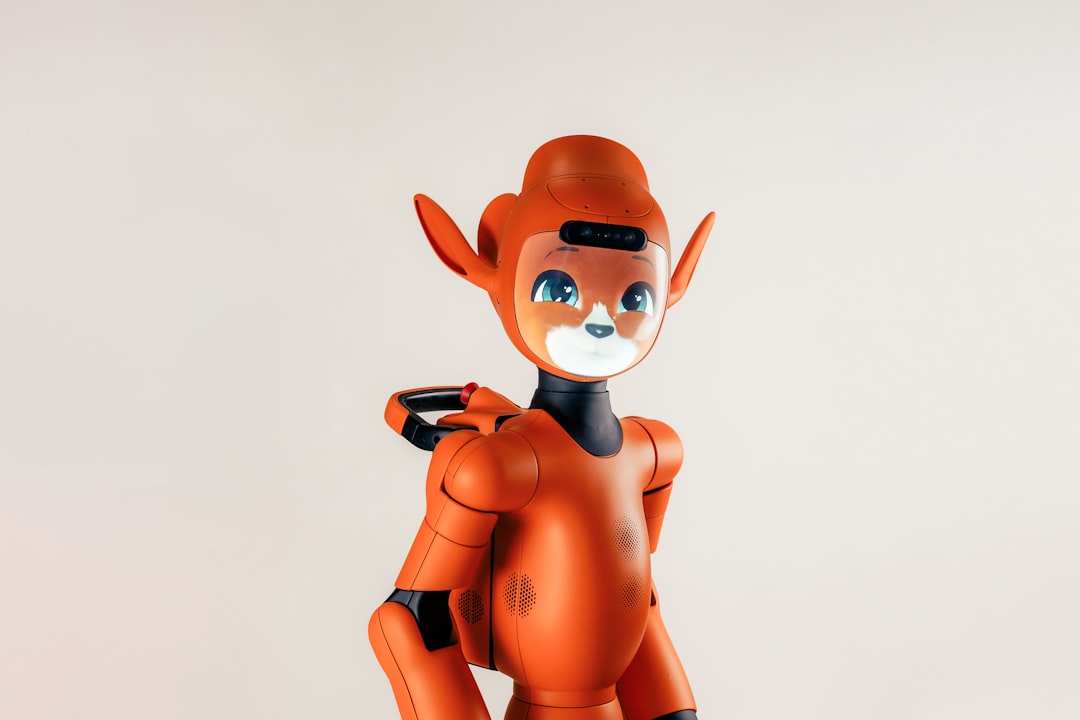
We're talking robots. In 2026, humanoid robots will no longer be showroom decorations—they'll be doing simple physical labor in factories and homes. Tesla's Optimus and domestic companies like UBTech have already announced mass production plans. They won't be cheap, but it's a breakthrough from zero to one.
Trend 5: AI Will Give Rise to "Super Individuals"
This is what I'm most excited about. With the maturation of AI toolchains, one person plus a suite of AI tools can accomplish the work of a ten-person team. You'll see more and more "companies of one." Freelance designers using AI for image generation, layout, and motion graphics; cross-border e-commerce sellers using AI for multilingual customer service and marketing, managing dozens of stores single-handedly. Of course, this demands higher comprehensive skills—you need to understand both your business and how to harness AI. These days, if you don't know some AI monetization strategies, you can hardly call yourself a side-hustler.
Conclusion: Don't Be a Bystander—Get in the Game and "Use" It
总结:别做旁观者,下场去"用"
After all this writing, it's time to wrap up. Speaking from the heart, after reading countless reports and talking to numerous practitioners, my deepest insight is this: In this AI revolution, the biggest risk isn't being replaced by AI—it's being replaced by those who know how to use AI.
The greatest lesson from 2025 is that AI is no longer that untouchable "sacred cow." It has become infrastructure, as fundamental as water, electricity, and the internet. You don't need to understand the underlying principles, but you must learn to use it. Just as you don't need to build a car, but you do need to know how to drive one.
Don't just salivate over others' success stories. AI skills are truly developed through practice. Even if you start today by using an AI tool to write a weekly report, create an image, or organize data, that's progress. Remember, in the AI era, the ability to ask questions matters more than the ability to answer them, and the ability to judge is more valuable than the ability to generate.
Finally, if you want to stay updated on the latest developments in this field, make it a habit to read the daily AI news digest to track the movements of major tech companies and new innovations from the open-source community. Don't fear information overload—the more you consume, the more intuitive it becomes. In 2026, let's all be the surfers riding the AI wave, not the spectators getting washed up on the shore. Let's go, everyone! 🚀
We use optional cookies to improve your experience on our website, such as connecting through social media and showing personalized ads based on your online activity. If you reject optional cookies, only cookies necessary to provide you with services will be used. You can change your choice by clicking "Manage Cookies" at the bottom of the page.
Privacy Statement · Third-Party Cookies