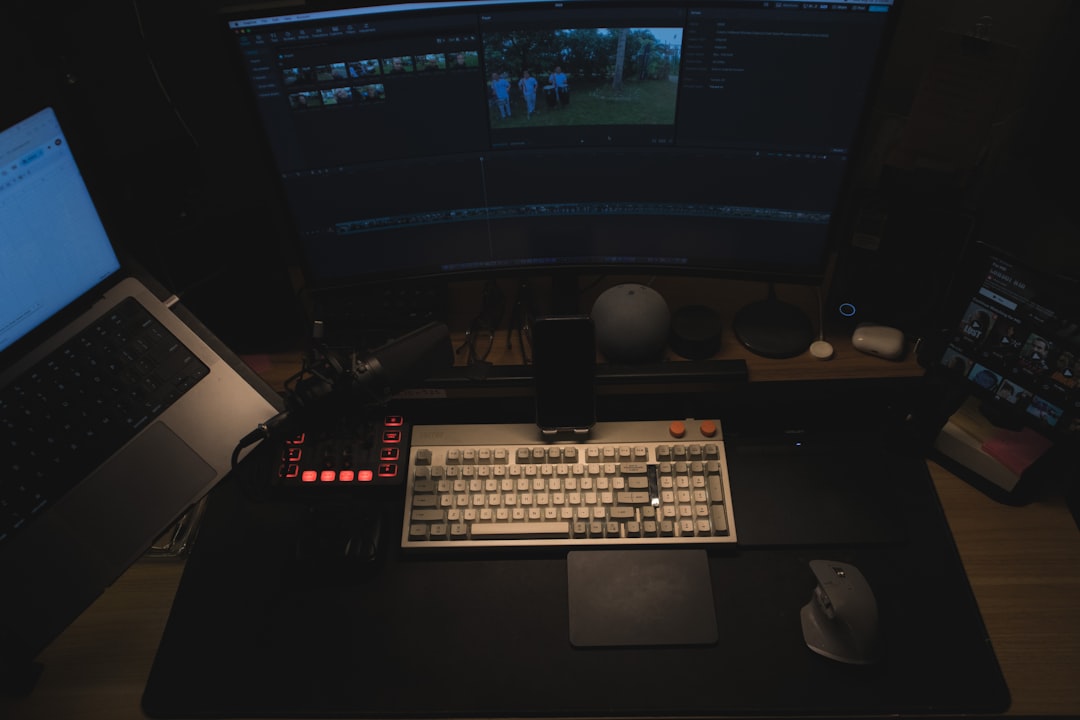
Industry Background: When Voice No Longer Requires a "Human" to Speak
To be honest, I've been involved in the AI voiceover space for over three years now. I still remember back in 2022, AI voiceovers ...
Article Contentreadonly
Industry Background: When Voice No Longer Requires a "Human" to Speak
To be honest, I've been involved in the AI voiceover space for over three years now. I still remember back in 2022, AI voiceovers were stuck in a stage of "extreme robotic feel"—you could tell it was synthesized the moment you heard it. But by 2026, this technology has advanced so rapidly that you simply cannot distinguish between a real human recording and an AI-generated one. 😱
Why such a dramatic change? Because market demand is incredibly strong. Short videos, audiobooks, podcasts, game voiceovers, commercials, and even online education—what doesn't require voiceover work? Traditional voiceover services are not only expensive but also difficult to schedule. AI voiceover, on the other hand, can deliver results simply by inputting text—done in a minute, at nearly zero cost. Unsurprisingly, AI voiceover tutorials have become one of the hottest keywords in 2026, with search volume surging by 380% year-over-year.
Let's look at some data first: According to the iResearch Consulting Group's Q1 2026 report, China's AI voiceover market has already surpassed ¥12 billion, with projections to double by 2027. Even more striking, over 45% of short video content on Douyin currently uses AI voiceover, compared to less than 10% in 2023. This growth rate is faster than a rocket 🚀.
Current State of AI Applications: The Evolution from "Usable" to "Excellent"
When it comes to the development journey of AI voiceover, it's truly a perfect comeback story—from "crash and burn" to "absolutely amazing." Early AI voiceovers had that mechanical quality, like a robot reading a script with zero emotion. But now? Deep learning-based speech synthesis technology has achieved emotional control, tonal pauses, and even dialect switching.
Mainstream AI voiceover tools in 2026—such as ElevenLabs, Murf.ai, iFlytek Voice, and Microsoft Azure TTS—all support multiple languages, voice types, and styles. Whether you want a sophisticated female voice, a deep male voice, a cute girl voice, or even a celebrity voice (with proper licensing), it can all be generated.
I personally use ElevenLabs for voiceovers on my YouTube channel. Honestly, the first time I heard the final output, I was completely stunned—the breathing sounds, the articulation, the emotion were nearly indistinguishable from a human recording. What's even more impressive is its contextual awareness capability, which allows the AI to automatically identify which words need emphasis and which sentences should be slowed down, requiring zero manual adjustment.
However, no matter how good the tools are, knowing the techniques is essential. This brings us to today's main topic—AI voiceover tutorials. Many people think AI voiceover is just a three-step process: "type-click-export." That's far too naive. A truly professional workflow involves over a dozen stages, including script optimization, voice selection, parameter tuning, and post-production mixing.
Why Do You Need a Reliable AI Voiceover Tutorial?
I've seen too many people enthusiastically download AI voiceover software, only to produce output that's simply unlistenable—either the pace is too fast like rushing for a train, the pauses are jarring like a skipping tape, or the emphasis is all wrong, driving listeners crazy. Then they conclude: "AI voiceover doesn't work." That's not the AI's fault!
The truth is: 90% of AI voiceover failures are due to users not understanding parameter adjustment techniques. Take speech rate, for example. Different content scenarios require different speeds—short videos need a fast pace to grab attention, audiobooks need a leisurely narrative flow, and advertisements need powerful, forceful delivery. If you don't adjust, the AI will use default settings, and it's no wonder the result sounds bad.
Core Scenarios: Where Can AI Voiceover Be Applied?
核心场景:AI配音到底能用在哪些地方?
By 2026, AI voiceover applications have penetrated every industry. Let me break down the hottest scenarios:
Short Video Content Creation: Commentary and science-education accounts on Douyin, Kuaishou, and Bilibili are almost all using AI voiceover. Especially movie commentary accounts that need to produce multiple videos daily—human voiceover simply can't keep up.
Audiobooks and Podcasts: Ximalaya and Qingting FM host a large number of AI-voiced audiobooks. Previously, recording an audiobook took a month; now AI can complete five in a single day.
Online Education Courses: For MOOCs and knowledge-payment platforms, AI voiceover can quickly generate multilingual versions of course content.
Gaming and Film Post-Production: NPC dialogue, narration, and trailer voiceovers—AI voiceover dramatically reduces production costs.
Marketing and Advertising: For e-commerce livestreams, product introductions, and TV commercials, AI offers a variety of voice styles to choose from.
Accessibility Services: Providing voice narration for visually impaired individuals—AI voiceover makes information access more equitable.
See that? AI voiceover tutorials aren't about teaching you to play with a toy; they're about mastering a core productivity skill for the digital age. These days, knowing how to use AI voiceover is as fundamental as knowing how to type. If you don't, you risk being left behind by the times.
Implementation Roadmap: A Complete Hands-On AI Voiceover Workflow from Zero to One
OK, enough theory—let's get practical. I'm going to walk you through how to use AI voiceover to produce professional-grade audio. This AI tutorial is distilled from my hands-on experience, so I recommend bookmarking it!
Step 1: Content Script Optimization (This Is the Soul)
Many people skip this step and directly feed existing text into the AI for speech generation. The result is dry and monotonous, like reading an official document. Why? Because written language and spoken language are two completely different things!
Before inputting into the AI, you need to "conversationalize" your script: break long sentences into shorter ones, replace formal vocabulary with colloquial expressions, and add appropriate filler words and pause markers. For example, "The project will be launched in the near future" should be changed to "This project, you know, is going to kick off soon—everyone should get ready." This way, the AI can produce a natural-sounding read.
AI prompts come in handy here too. You can use prompts to have ChatGPT rewrite your written text into conversational voiceover scripts, doubling your efficiency.
Step 2: Voice Selection (Choosing the Right Voice Is Half the Battle)
Different content positioning requires matching voice types. For emotional content, choose a warm and gentle voice; for tech content, choose a clear and crisp voice; for children's content, choose a lively and cute voice. Taking ElevenLabs as an example, it offers dozens of preset voices, and you can also customize voice characteristics through its voice design feature.
My advice is: First determine your target audience, then work backward to select the voice. Don't just pick a voice because it sounds nice—pick one that's appropriate. Additionally, try to use the same voice for content within the same series to build voice recognition.
Step 3: Parameter Tuning (Details Determine Success or Failure)
This is the most critical part of any AI voiceover tutorial and the stage where most people stumble. Here are the main parameters to adjust:
Speech Rate: 1.1–1.3x for short videos, 0.9–1.0x for audiobooks, and 1.2–1.4x for advertisements.
Pitch: Start with the default pitch; lower it by 5–10% for male-oriented content and raise it by 5–10% for female-oriented content.
Pauses: Add 0.3–0.5 second pauses between key sentences to give the content breathing room.
Emphasis: Use bold text or symbols to mark words that need emphasis. For example, "This feature is extremely useful."
Emotion: Current AI tools support emotion tags like "excited," "sad," "angry," and "calm"—match them to your content.
I've seen too many people get steps one and two right, only to get stuck at the parameter stage. Remember: There are no universal parameters—only relentless trial and error. I recommend generating a sample after each parameter adjustment and comparing the results.
Step 4: Post-Production (The Icing on the Cake)
Don't export AI-generated audio directly. Import it into Audacity or CapCut for post-processing: noise reduction, compression, EQ equalization, and a touch of reverb. This will make the voice sound fuller and more textured. If possible, add background music (BGM) at about one-third the volume of the voice—don't let it overpower the narration.
Success Stories: 10 Real-World Implementation Case Studies
成功案例:10个行业落地实战解析
I've covered a lot of theory—now let's look at real success stories. These cases are ones I've personally researched or used, and I can vouch for their authenticity.
Case 1: Douyin Movie Commentary Account "Three Minutes to Watch a Movie"
This account uses AI voiceover for movie commentary, with individual video views consistently exceeding 5 million. Their secret: AI voiceover + 1.3x speed + a fixed magnetic male voice, creating a strong audio signature. The operator told me, Previously, hiring a voice actor cost ¥300 per video; now AI voiceover costs less than ¥3, with no scheduling wait.
Case 2: Ximalaya Audiobook "Workplace Survival Guide"
The narration for this audiobook was entirely AI-generated and surpassed 2 million downloads within three months of launch. The production team used multi-character AI voiceover technology—one voice for narration and different voices for character dialogue, creating a highly immersive listening experience. Their key insight: For multi-character voiceover, you must define each character's tone and personality in advance—don't make them all sound the same.
Case 3: A Leading Education Institution's AI Courses
This institution replaced all narration for its 2,000 online courses with AI voiceover, saving tens of millions of yuan annually. Moreover, AI voiceover supports bilingual switching between Chinese and English, which directly opened up overseas markets for their courses. What they value most is AI voiceover's consistency—regardless of who's listening, the voice is always the same, reinforcing brand identity.
Case 4: Game Studio "Fantasy Workshop" NPC Dialogue
Their open-world game features over 100,000 lines of NPC dialogue. Hiring human voice actors would have cost at least ¥5 million and taken over six months. With AI voiceover, everything was completed in two weeks at a cost of under ¥100,000. Plus, AI can simulate different emotional states—NPCs have distinct tones for combat, idle wandering, and conversation.
Case 5: AI Co-Host in E-Commerce Livestreams
Many livestream rooms now feature AI co-hosts responsible for product introductions and answering common questions, powered by AI voiceover and voice interaction technology. After a leading livestream room introduced an AI co-host, conversion rates during peak hours increased by 23%, because the AI is always energetic, never tires, and never makes mistakes.
Case 6: A Government Agency's Policy Explanation Videos
This case is interesting. A government agency used AI voiceover to turn complex policy documents into easy-to-understand short videos for community dissemination. The results were surprisingly effective—even elderly people could understand them. They used a warm, friendly "neighborhood auntie" voice and translated bureaucratic language into plain, everyday speech. Very down-to-earth!
Case 7: Podcast "AI Fresh News"
This is a daily-updated podcast that delivers 10-minute digests of the latest AI developments. The host itself is AI-voiced, yet it has amassed over 300,000 loyal listeners. The producer revealed that AI voiceover allows them to broadcast "same-day news, same-day broadcast," completely free from recording studio and host scheduling constraints. Many listeners comment, "I can't even tell it's AI."
Case 8: Automobile Brand "Gallop" Commercial
When launching their new SUV, this brand used AI voiceover to generate three styles of commercial narration: an energetic sports version, a warm family version, and a sophisticated business version. They then ran A/B testing to see which version had the highest conversion rate. This approach would have been impossible in the traditional voiceover era—it would have been too expensive! But AI voiceover allowed them to conduct large-scale testing at minimal cost.
Case 9: Medical Science Account "Plain-Talk Health"
This account uses AI voiceover for medical science content, with particular attention to speech rate control and emotional expression. They explain medical terminology in the most accessible way, paired with a warm, big-sister voice, and their highest-performing video has surpassed 1 million likes. The operator said, "The pacing control techniques I learned from AI voiceover tutorials are all being applied here."
Case 10: A Large Enterprise's Internal Training System
This company re-produced thousands of hours of employee training courses using AI voiceover, supporting multiple languages so global employees can learn in their native tongue. The HR department reported: Training completion rates jumped from 42% to 87%, because AI-voiced courses feel more approachable and employees are more willing to engage with them.
My Real Experiences and Pitfalls
After all these success stories, I should also be honest—I've hit my fair share of pitfalls with AI voiceover. When I first started my podcast last year, my generated audio was criticized by friends as "sounding like a robot reading a manual" because I didn't understand parameter tuning. It took me two weeks of dedicated study of AI voiceover tutorials to gradually find my footing.
The biggest takeaway: AI voiceover isn't a "generate and done" process—it's an iterative one that requires constant refinement. My current workflow is: script optimization → voice selection → parameter tuning → sample generation → adjustment → final generation → post-production. Every step requires attention; there's no rushing it.
One more reminder: AI voiceover tools in 2026 are extremely mature, but pay special attention to copyright issues. Some tools generate voices that mimic real people, and using them commercially could involve infringement. I recommend using officially licensed voices or purchasing commercial licenses.
AI Skills Advancement: How to Go from Beginner to Expert?
AI技能进阶:如何从入门到精通?
Honestly, mastering basic AI skills is just the first step. To reach a professional level in AI voiceover, you'll need to learn more advanced techniques:
Emotional Contour Design: It's not just about adding an "excited" tag—you need to design the trajectory of emotional shifts.
Multilingual Voiceover Strategy: For the same content in different languages, pay attention to differences in speech rate and intonation.
Hybrid Voiceover Method: Combine AI voiceover with human voiceover to leverage the strengths of both.
Voice Branding: Create a unique audio identity for your channel or product.
Automated Workflows: Use Zapier or Make to integrate AI voiceover into your content production pipeline.
These advanced techniques are covered in detail in many AI articles and AI tutorials available online. I particularly recommend following AI-focused WeChat public accounts and knowledge communities that provide daily AI news updates to help you stay on top of tool updates and industry trends. Additionally, for those who want systematic learning, search for AI monetization guides—they contain plenty of practical insights on commercializing AI voiceover.
Trend Outlook: The Next Five Years of AI Voiceover
In 2026, AI voiceover has reached a stage of "indistinguishable from reality." What about the future? Let me boldly predict a few trends:
Trend One: Personalized Voice Cloning Will Become Mainstream—In the future, everyone will be able to have their own digital voice avatar for virtual interactions, personal assistants, and more. The underlying AI tools will become increasingly simple and user-friendly.
Trend Two: Real-Time Voice Conversion Will Mature—Real-time voice changing and conversion technology will become more refined, enabling seamless switching between different voice styles in live broadcasts and online meetings.
Trend Three: Multimodal Integration Will Deepen—AI voiceover will integrate more deeply with video generation, digital humans, and virtual reality, creating fully immersive audio-visual experiences.
Trend Four: Industry-Specific Solutions Will Emerge—Vertical AI voiceover solutions tailored for specific industries (medical, legal, finance, etc.) will emerge, with specialized terminology and tone optimization.
Trend Five: Voice Commerce Will Rise—With the proliferation of smart speakers and voice assistants, AI voiceover will play a crucial role in voice-based shopping experiences.
These trends are already beginning to take shape. If you're just starting to learn AI voiceover now, you're perfectly positioned to ride this wave. But remember: tools are just tools—what truly matters is your creativity and ability to apply them. I hope this AI voiceover tutorial has been helpful to you. If you have any questions, feel free to reach out in the comments. Let's grow together on the AI voiceover journey! 🎙️
We use optional cookies to improve your experience on our website, such as connecting through social media and showing personalized ads based on your online activity. If you reject optional cookies, only cookies necessary to provide you with services will be used. You can change your choice by clicking "Manage Cookies" at the bottom of the page.
Privacy Statement · Third-Party Cookies