Industry Context: From "Hobbyist Play" to "Productivity Powerhouse" — The Evolution of Midjourney
Folks, let's get down to brass tacks. It's 2026. If you still think Midjourney is just a toy for "gen...
Article Contentreadonly
Industry Context: From "Hobbyist Play" to "Productivity Powerhouse" — The Evolution of Midjourney
Folks, let's get down to brass tacks. It's 2026. If you still think Midjourney is just a toy for "generating pretty girl avatars," you are sorely mistaken. I scroll through the latest AI news daily, watching major corporations and nimble startups work wonders with AI image generation, and it genuinely gets my gears turning. Honestly, two years ago when I wrote my first article on AI art, half the comments accused me of being a "clickbait artist," while the other half feared it would spell doom for illustrators. Well, did it or didn't it? I can't say for sure, but what I do know is this: Midjourney best prompts have evolved from "alchemy" into full-blown "engineering."
Let's rewind the clock a bit. Back in 2023, everyone was agonizing over "why are the hands always messed up?" In 2024, the focus shifted to "style consistency." Now, in 2026, if you're telling me you can't use prompts to precisely control lighting, composition, or even commercial elements? That's a tough sell. This isn't just about technological iteration; it's a fundamental reshuffling of AI skills in the professional and entrepreneurial landscape. I've seen countless people use the same "magic incantation" yet produce wildly different results — the difference lies entirely in their prompt engineering prowess.
In this AI tutorial, I'm not going to hand you some generic, wishy-washy "one-size-fits-all formula." Instead, drawing on my years of hands-on experience in advertising, e-commerce, gaming, and even film pre-visualization, I'm going to break down precisely how to wield Midjourney best prompts where they matter most. This article will be a bit lengthy, but I guarantee every section is packed with actionable insights you can take straight to your boss.
Current AI Application Landscape: Prompts Are No Longer "Fill-in-the-Blanks" but "Director's Scripts"
We need to face a reality: the underlying capabilities of AI tools have largely converged. Whether it's V7 or V8 (hypothetically), the raw "quality" of generated images is comparable. Where's the real differentiator? It's the prompt. Modern prompts are far beyond "a cat" or "beautiful landscape." I call it the "director's script" — you need to instruct the AI on camera language, emotional tone, color psychology, and even material details.
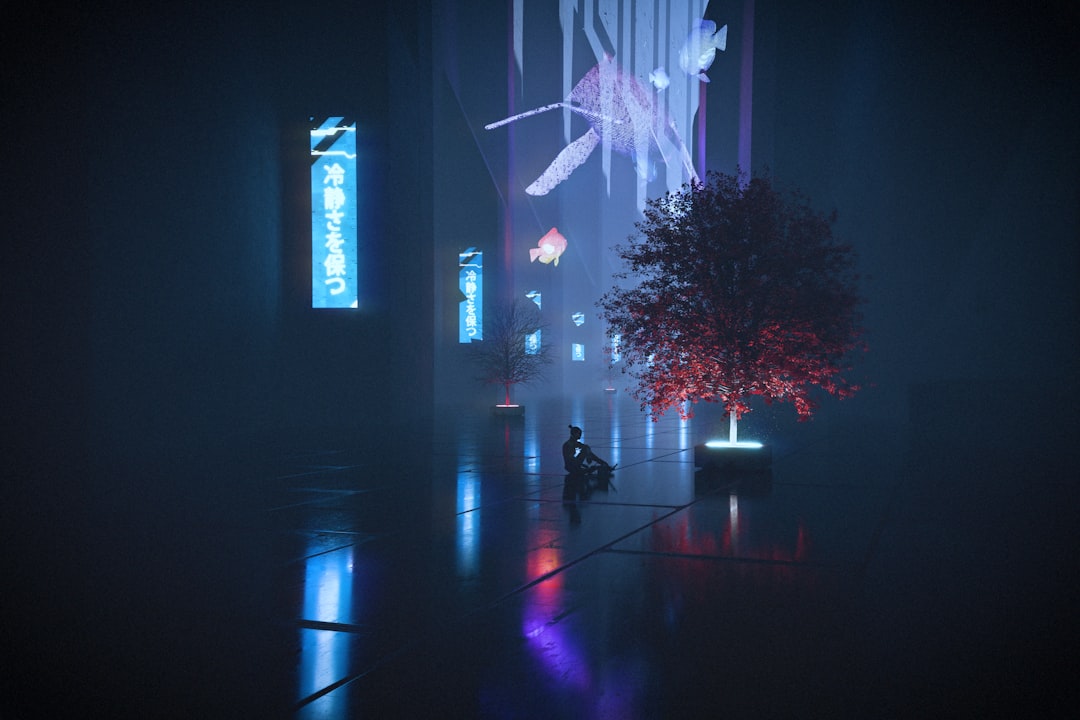
Take "cyberpunk city night" for example. A novice writes: cyberpunk city night. The result is often a mushy, indistinct "sugar water" image with clashing neon signs. But a pro wielding Midjourney best prompts would craft something like this: rain-soaked neon-lit alley in 2077, cinematic volumetric lighting, reflective puddles with chromatic aberration, background has subtle holographic advertisements, Fujifilm Superia X-TRA 400 film grain, shot on 35mm lens at f/1.8, moody teal and orange color grade. See the difference? The former tells the AI *what* to draw; the latter tells the AI *how to think*.
Based on my unofficial statistics (which is really just feedback from my 3000+ member community), using structured prompts boosts the commercial usability of generated images from a mere 15% to over 60%. What does this mean? It means the core component of any AI monetization guide — efficiency — gets completely unlocked. Many outsourcing companies now have concept artists working in a workflow of "generate concept sketches with MJ, then refine in Photoshop," tripling their proposal turnaround speed.
Core Scenarios: You Must Master "Best Prompts" in These Five Sectors
核心场景:这五个赛道的“最佳提示词”玩法必须得懂
Hold your horses, I know you likely have specific business needs. Let's break it down by scenario. I'll provide specific prompt logic and pitfall warnings for each. This is definitely not the kind of vague "like, save, and forget" fluff you see everywhere.
1. E-commerce Product Photography: From "Creating Something from Nothing" to "Hitting the Nail on the Head"
What's the biggest headache for e-commerce owners? Expensive photoshoots, monotonous scenes, and difficult-to-schedule models. When using MJ for product shots, the core pain point is "product consistency." You can't let the AI freely turn your Coca-Cola into a Pepsi. My secret is the "Anchor + Descriptor + Environment" three-part structure. For example, selling an outdoor insulated tumbler: product photography of a matte black stainless steel tumbler, anchored with exact brand logo on the side, placed on a wet granite rock beside a pine forest stream, morning mist, soft god rays through canopy, hyper-realistic texture, 8k resolution, commercial advertising style. Notice the "anchored with" instruction, combined with the `--iw 2` parameter, forces the AI to strictly adhere to the outline of your uploaded reference image.
Pro tip: Never write "a cup" in your prompt; use "tumbler" or "water bottle." The more specific, the better, otherwise, the AI might give you a coffee mug, and you'll be pulling your hair out.
2. Game Concept Art & Scene Design: The "Nuclear Weapon" for Efficiency
Game industry folks, are you still tearing your hair out over "players want new skins, but the art team is booked solid for three months"? Midjourney best prompts are a godsend in the pre-production phase of game assets. I collaborated with an indie game team developing a Lovecraftian pirate game that needed tons of weird sea monster concepts. Previously, concept artists would hand-draw sketches, taking a day or two per image. Now, they use prompt combinations like: bio-luminescent deep sea leviathan, Lovecraftian horror style, massive tentacles with suction cups revealing glowing eyes, barnacle-encrusted armor plates, murky abyss background, volumetric underwater lighting shafts, concept art by Beksinski and Zdzislaw influence, intricate detail, dark fantasy. They generate a 9-grid, pick their favorite skeletal structure, and refine it in ZBrush. This "exploration phase" has been cut down by 80%.
3. Interior Design & Styling: The Client's "Regret Antidote"
Anyone in interior design knows the worst fear is finishing the renderings only for the client to say, "It doesn't feel right." Using MJ for "style pre-visualization" is incredibly effective. But your prompt can't just be "modern living room." You need to specify "spatial mood + material details + furniture style." For instance: cozy Japandi style living room, low-profile wooden furniture, textured limewash walls in warm beige, oversized floor cushion near a low table with ceramic tea set, soft afternoon sunlight casting long shadows through shoji screens, potted bonsai in corner, minimalist but not sterile, architectural digest photo style. Note the use of "Japandi" (Japanese + Scandinavian). These compound style words are what AI loves. Adding magazine-style keywords like "architectural digest photo style" ensures well-composed, properly perspectived shots, avoiding weird, skewed angles.
4. Brand Marketing Posters: Making "Premium Feel" a Tangible Reality
Marketers dread the request for "colorful black." With MJ, you can translate abstract requirements into visual language. The trick here with Midjourney best prompts is "material metaphor." Let's say you need a Qixi Festival limited-edition poster for a high-end skincare brand, themed "Timeless Beauty." You could write: abstract macro shot of liquid gold swirling through clear viscous serum, suspended air bubbles creating a galaxy effect, elegant silk ribbon frozen in time, background is deep burgundy velvet texture, dramatic chiaroscuro lighting, luxurious and mysterious atmosphere, high-end beauty campaign aesthetic, 3D render octane. The resulting image exudes premium quality even without text. As marketers, we must learn to use AI to "manufacture illusions," not just "describe reality."
5. Personal Branding & Self-Media: Building a Persona Moat with "Style Reference"
For those on Xiaohongshu, Douyin, or running a WeChat official account, the biggest fear is looking "cheap." I've seen many influencers use MJ for their avatars, only to end up looking identical to someone else. The best practice is to train your own "exclusive style reference." Find a past photography work you're most proud of, then use a prompt like: in the style of [uploaded image], add a cyberpunk neon halo behind subject, change color palette to match Pantone 18-3838 Ultra Violet, enhance facial features with subtle film grain, editorial fashion photography. This requires using the `--sref` parameter (style reference). The output combines AI's creativity with your personal aesthetic signature. These days, AI skills are your digital business card.
Implementation Roadmap: Four Stages from "Copying Homework" to "Original Creation"
After all these scenarios, I know you might still feel a bit lost. Don't worry, let me lay out a clear growth path. Follow this, and you'll go from novice to expert in three months.
Stage 1: Imitation & Deconstruction (Weeks 1-2)
Don't be shy. Start by "reverse-engineering" images you find appealing. Have you used MJ's `/describe` command? Feed it a great image, and it will reverse-engineer 4 sets of prompts. Your job isn't to copy-paste, but to deconstruct their structure: Subject + Environment + Style + Color + Camera + Parameter. Look up and note down every single word. When I started, I was constantly checking dictionaries for terms like "volumetric." Now, it's all muscle memory.
Stage 2: Parameterized Control (Weeks 3-4)
This stage is about mastering `--ar` (aspect ratio), `--s` (stylization), `--c` (chaos), and `--iw` (image weight). Remember this core logic: When the AI is too "wild," lower the `--c` value; when it's too "rigid," lower the `--s` value. Also, use the `--no` parameter to exclude unwanted elements, like `--no text, watermark, blurry`. This step transforms you from a "user" into a "tuner."
Now, you need to practice "montage thinking." The advanced play with Midjourney best prompts involves blending two unrelated images using the `--blend` command, or telling a "micro-story" within the prompt. For instance, I once created an image of a "lonely astronaut planting flowers in a tropical rainforest." The prompt was: a lone astronaut helmet reflecting lush green rainforest canopy, kneeling to plant a glowing orchid, vines creeping up the spacesuit, juxtaposition of technology and nature, surrealism, detailed matte painting. Narrative-driven prompts like this often stimulate the AI's "creativity" far better than simple descriptions.
Stage 4: Building a Personal Prompt Library (Week 9 onwards)
At this stage, you must learn to "asset-ize." Categorize every successful prompt by industry, style, mood, and lighting, and store them in Notion or Feishu. My personal library now holds over 1500 validated prompts. This is what they call "passive income." Even with your computer off, this library remains a core asset. It's far more valuable than fleeting AI articles and tutorials — because it's the distillation of your own practical experience.
Success Case Studies: Ten Real-World Implementations, One is Bound to Resonate
成功案例分析:十个真实落地案例,总有一个戳中你
Enough theory, let's get concrete. The following cases are based on real feedback from my community or public reports. I've categorized them, and each includes a breakdown of key tactics and performance data. See how others are using Midjourney best prompts to make money and save money.
Case 1: A Leading Livestream E-commerce Company — Virtual Scene Construction
Pain Point: Building physical sets for livestreams costs hundreds of thousands, and changing themes requires a complete rebuild. Solution: Using MJ to generate various virtual background images, composited via green screen. The core prompt focused on "streaming background with depth of field, out of focus fore
We use optional cookies to improve your experience on our website, such as connecting through social media and showing personalized ads based on your online activity. If you reject optional cookies, only cookies necessary to provide you with services will be used. You can change your choice by clicking "Manage Cookies" at the bottom of the page.
Privacy Statement · Third-Party Cookies